Wisdom tooth surgery: what patients can expect
Published on 2 October 2026
Pain, swelling and recovery are common concerns before wisdom tooth surgery. Knowing what happens before, during and after the procedure can help patients prepare.
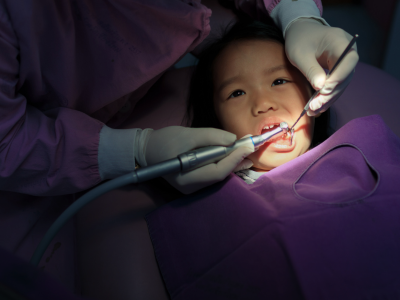
For many patients, the prospect of wisdom tooth surgery may raise concerns about pain, swelling and recovery. Yet most procedures are routine and can be performed under local anaesthesia.
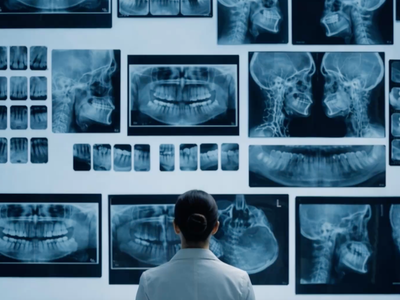
At the National University Centre for Oral Health, Singapore (NUCOHS), preparation begins before the surgery itself. Beyond clinical examination and dental imaging, the team takes time to discuss treatment options with patients, helping them understand why removal may be recommended and what to expect during recovery.
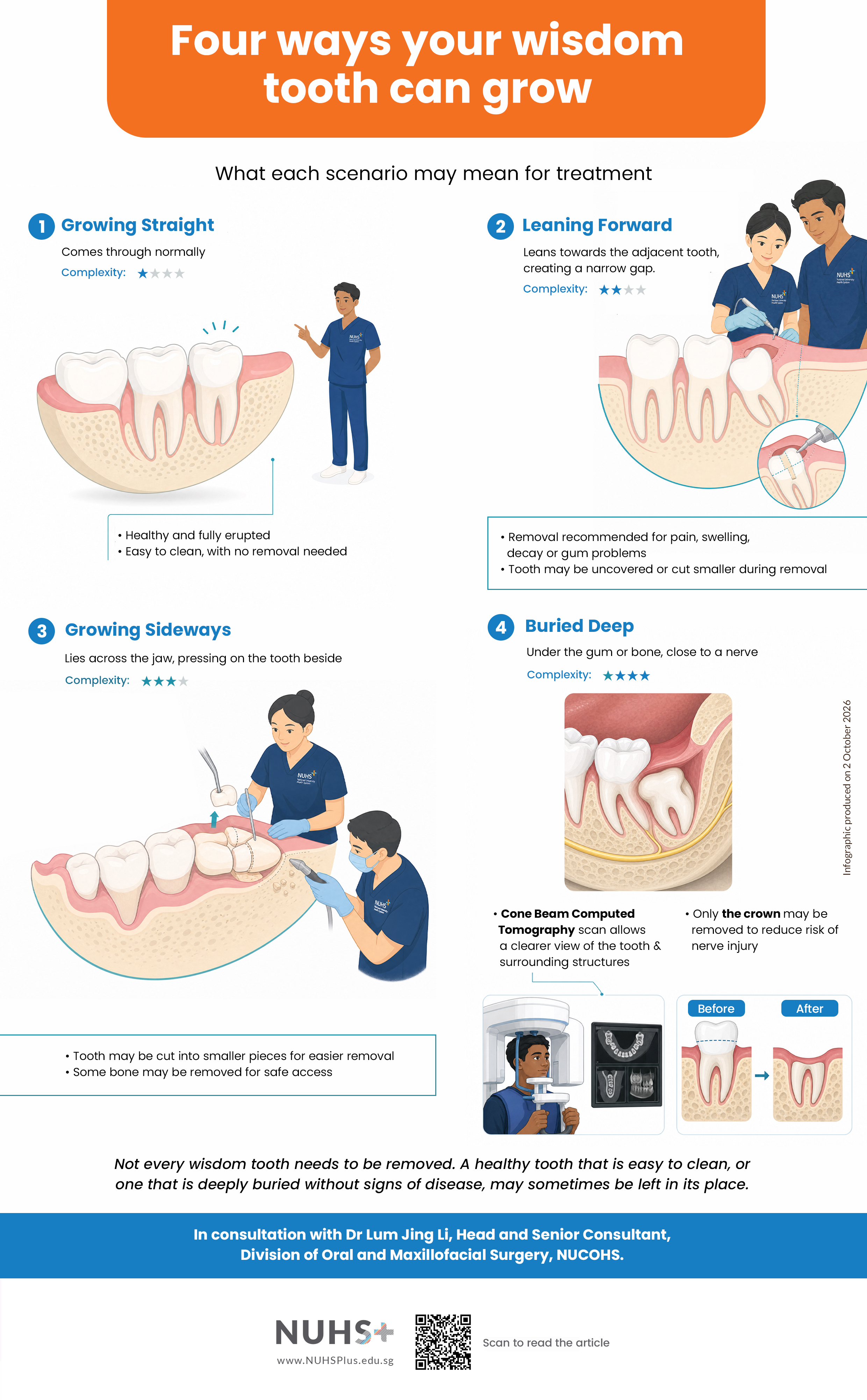
Wisdom teeth are the last molars to erupt and usually appear during the late teens or early adulthood. While some erupt normally and can be maintained with good oral hygiene, others may become impacted, misaligned or difficult to clean.
Food can become trapped around these teeth, increasing the risk of pain, swelling, gum inflammation and tooth decay. Disease affecting an impacted wisdom tooth may also affect the adjacent tooth.
Common patient concerns
| Stage | Patient concern |
|---|---|
| Before surgery | “Why do I need this if it does not hurt all the time?” |
| During surgery | “I can feel something. Is something wrong?” |
| After surgery | “How do I know if recovery is normal?” |
When additional support may be needed
While most procedures are performed under local anaesthesia, some patients may require additional support because of dental anxiety, a pronounced gag reflex or deeply impacted wisdom teeth.
Options include nitrous oxide sedation, intravenous sedation and general anaesthesia, depending on clinical assessment of the patient's condition and their medical needs.
More-complex cases may require additional imaging. If a wisdom tooth is deeply impacted or located close to vital structures, cone beam computed tomography (CBCT) can help clinicians visualise the surrounding anatomy and plan treatment.
“CBCT imaging helps patients better understand the relationship between the wisdom tooth and the surrounding structures, while also helping surgeons plan treatment and minimise the risk of complications,” said Dr Lum.
In selected cases where the roots are close to a nerve, coronectomy – removal of the crown while leaving the roots in place – may be considered to reduce the risk of injury to nearby structures. |
Recovery and follow up
Most patients can resume their usual activities within one to two weeks, although recovery varies according to the complexity of the procedure and the individual.
While wisdom tooth removal is not necessary for every patient, a thorough assessment can help determine whether treatment is the most appropriate option. Understanding the procedure and recovery process can help patients make informed decisions and approach surgery with greater confidence.
“When performed in an appropriate clinical setting and by an experienced clinician, wisdom tooth surgery is often far less daunting than many patients expect,” said Dr Lum.
In consultation with Dr Lum Jing Li, Head and Senior Consultant, Division of Oral and Maxillofacial Surgery, NUCOHS.

Related Articles