Why are more children developing IBD? What to know
Published on 11 November 2026
Picky eating or a sign of illness? The symptoms of Crohn’s disease can be easy to miss, but early treatment and adjustments can reverse growth impairment.
At a glance
- Data from an Asia-Pacific inflammatory bowel disease (IBD) registry showed that more than half of Singaporean children with IBD had Crohn’s disease.
- Processed foods, antibiotic overuse and reduced exposure to nature are among the possible contributors to the rise in IBD.
- It can begin with less-obvious signs such as poor appetite, slow growth or fatigue, without stomach pain or diarrhoea. These can delay diagnosis and treatment.
A child may gradually lose their appetite, tire more easily or stop gaining weight. When these changes happen little by little, they can be hard for parents and caregivers to notice at first.
But for some children, they may be early signs of Crohn’s disease, a form of inflammatory bowel disease (IBD) that causes ongoing inflammation in the gut. Not every child experiences the more-familiar symptoms of stomach pain or bloody diarrhoea, which can make the condition harder to recognise and possibly delay diagnosis and treatment.
As childhood IBD becomes more common, recognising its early signs is increasingly important. Across seven specialist centres in the Asia-Pacific region, the number of recorded cases rose by 1.5 to 2 times between 2010–2014 and 2015–2019.
It’s not just about what children eat
Dr James Huang, Senior Consultant, Division of Paediatric Gastroenterology, Nutrition, Hepatology and Liver Transplantation, Department of Paediatrics, Khoo Teck Puat – National University Children’s Medical Institute (KTP-NUCMI), National University Hospital (NUH), has seen more children with IBD locally since 2010. He cites dietary changes, including increased consumption of processed foods such as instant noodles and preserved meats, as one possible contributor.
However, food alone is unlikely to be the whole story. Antibiotic overuse and less exposure to green spaces may also influence the bacteria living in a child’s gut, which in turn can affect how the immune system develops, he explained.
In Crohn’s disease, the immune system can overreact, triggering persistent inflammation that damages the gut. Genetics may also play a role in some cases, though the majority of patients do not have a single genetic reason. Dr Huang believes the cause of Crohn’s disease is multi-factorial, likely arising from a combination of genetic, environmental and immune-related factors, rather than any single food or lifestyle habit.
For some children, the clues are subtle
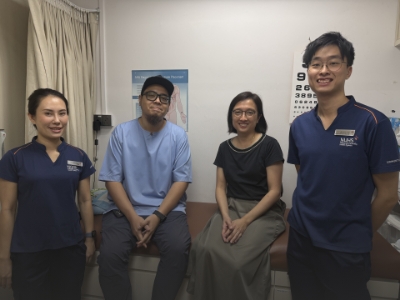
Muhammad Anas, one of Dr Huang’s patients, began eating less and losing weight in primary school. His mother, Mdm Anisah Begum, initially thought he was losing his baby fat. But recurring stomach pains would sometimes become so severe that he had to return home after just an hour or two of school.
“When I was about eight years old, I started experiencing sharp pains in my stomach every day,” recalled Anas, who is now 18. “One day, I passed a lot of blood in my stools and my mother called for an ambulance, which took me to NUH.”
Not every child with Crohn’s disease has such obvious symptoms. Some may have little or no stomach pain or diarrhoea, with changes such as poor appetite, slow growth or a prolonged fever providing the only clues.
Crohn’s can begin earlier than expected
Very young children can be affected too — in the data collected across the Asian-Pacific multi-centre registry network, 17.2 per cent of children with Crohn’s disease were diagnosed before the age of six. Dr Huang highlights common misconceptions that children can be “too young” to develop IBD, or that the condition is extremely rare in very young children and affects only older children and young adults.
When should your child see a doctor? Dr Huang advises parents to look out for symptoms that persist, worsen or begin to affect everyday life. Three changes to watch for:
|
Even a child who stops gaining weight without an obvious reason may need assessment. Anaemia, or a low red blood cell count, can develop before obvious bowel symptoms surface, causing paleness and tiredness that build up gradually. This can be detected through a simple blood test, which can pick up a significant number of cases of Crohn’s disease.
Why treatment timing matters for a child’s growth
Detecting Crohn’s early gives doctors a better chance to control inflammation before it causes lasting damage to the bowel. For children, timely treatment matters for another reason too: ongoing inflammation can stunt growth and delay puberty, affecting their final height as adults.
More than making symptoms go away, doctors aim for deep remission: where a child feels well, tests show that inflammation is under control, and the bowel has healed completely.
“We know from experience internationally and locally that the earlier you start effective treatment for Crohn’s disease, the better the chances of achieving deep remission,” Dr Huang said.
Treatment also extends beyond medication. Nutritional guidance from an IBD dietitian and psychosocial support from a paediatric psychologist can support a child’s overall well-being in the long term. For children whose growth or puberty has been affected, a paediatric endocrinologist will be able to provide additional support.
More treatment options for growing children
Treating Crohn’s disease in children is not just about bringing inflammation under control. Doctors also have to consider what treatment means for a child’s growth and development.
Steroids, for instance, can hinder growth when used over the longer term. For some children, doctors may therefore consider biologic medicines, which target inflammation more precisely.
Cost, however, can be a consideration. But with the availability of lower-cost biosimilars, which work in much the same way as the original biologic medicines, treatment has become more accessible for families. Monthly costs that once ran into a few thousand dollars can now be reduced to a couple of hundred, according to Dr Huang.
“This has allowed us to start effective treatments earlier without imposing too much financial burden on the family,” he said.
Managing symptoms while staying on track
Even with treatment, Crohn’s disease can return in episodes known as flares. Medicines may become less effective over time, and stress can sometimes exacerbate the condition. “Some patients have a very smooth sailing course without any flares; some patients have a very rocky and eventful course even with the best treatments,” Dr Huang shared.
For Anas, managing Crohn’s disease means adapting to life around treatment. He was on exclusive enteral nutrition — comprising a milk-only diet — for a few weeks at the start and also received steroid infusions to suppress inflammation in his bowel.
Today, Anas receives biologic therapy every six weeks to keep the disease in remission. At home, Mdm Begum prepares more soups and dishes with gravy instead of fried food, and the family has stopped consuming processed foods such as hot dogs and nuggets.
Emotional support can be just as important, particularly as children become more aware of how their condition sets them apart from their peers.
“Many children and adolescents struggle with identity issues when they are seen as ‘less healthy’ than their peers,” Dr Huang said. Psychological support can help children work through these concerns and adjust to life with a chronic condition.
Crohn’s disease continues to pose challenges for Anas, who misses classes about once a month due to stomach pain. Despite these disruptions, Anas has persevered with his studies and is pursuing his Higher NITEC in retail and online business at the Institute of Technical Education (ITE).
In consultation with Dr James Huang, Senior Consultant, Division of Paediatric Gastroenterology, Nutrition, Hepatology and Liver Transplantation, Department of Paediatrics, KTP-NUCMI, NUH.
Related Articles