What your phone picks up behind closed doors
Published on 28 October 2026
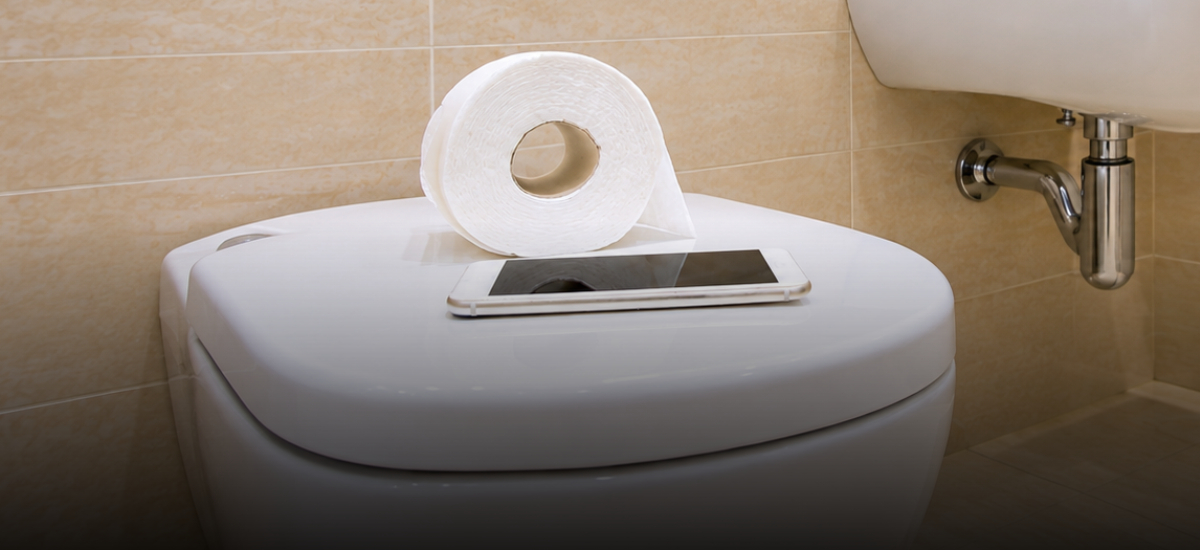
From listening to music in the shower to doomscrolling on the loo, what exactly are our phones picking up along the way?
You washed your hands. What about your phone?
Many of us reach for our phones immediately after handwashing. If contaminated, the device can transfer microorganisms back onto freshly cleaned hands.
Findings from a study involving 390 samples taken from mobile phones and hands showed that participants who had bacteria on their hands were three times as likely to have contaminated phones.
Is your phone dirtier than your toilet seat?
Given the number of surfaces a phone comes into contact with each day, it is perhaps unsurprising that many people believe it is 10 times dirtier than a toilet seat. But is that really true?
Adj A/Prof Mo Yin, Senior Consultant, Division of Infectious Diseases, Department of Medicine, National University Hospital (NUH), believes that the answer depends on what is being measured.
“The number of microorganisms alone does not determine the risk of illness,” she said. “Risk depends on whether a disease-causing microorganism is present, whether it remains viable, the amount transferred, the route of entry and the susceptibility of the person exposed.”
The organisms most commonly found on mobile phones are harmless skin or environmental microbiota. These include coagulase-negative staphylococci, which normally live on human skin, Staphylococcus aureus (including occasional methicillin-resistant strains), Micrococcus and Corynebacterium species, as well as Bacillus species.
What about phones on the frontline?
In healthcare settings, phone hygiene warrants particular attention because mobile phones frequently move between healthcare workers, patients, clinical surfaces and non-clinical environments. This creates more opportunities for potential pathogens, including antimicrobial-resistant organisms, to be transferred through the handling of mobile devices and potentially reach patients.
In a study on bacterial contamination of mobile phones, 85 per cent of phones contained staphylococci, while 37 per cent contained enterococci.
Your phone: Friend or foe
Most of us carry our phones everywhere, so being without them can feel strange. This constant attachment, coupled with the invisible nature of microorganisms, can create the false impression that our phones are clean. Unlike washing water bottles or wiping down tables, cleaning our phones has yet to become part of many people's daily routines.
“Phone hygiene does not yet have the same established social norms, environmental cues or routines as handwashing,” said Adj A/Prof Mo. “Awareness alone is often insufficient.”
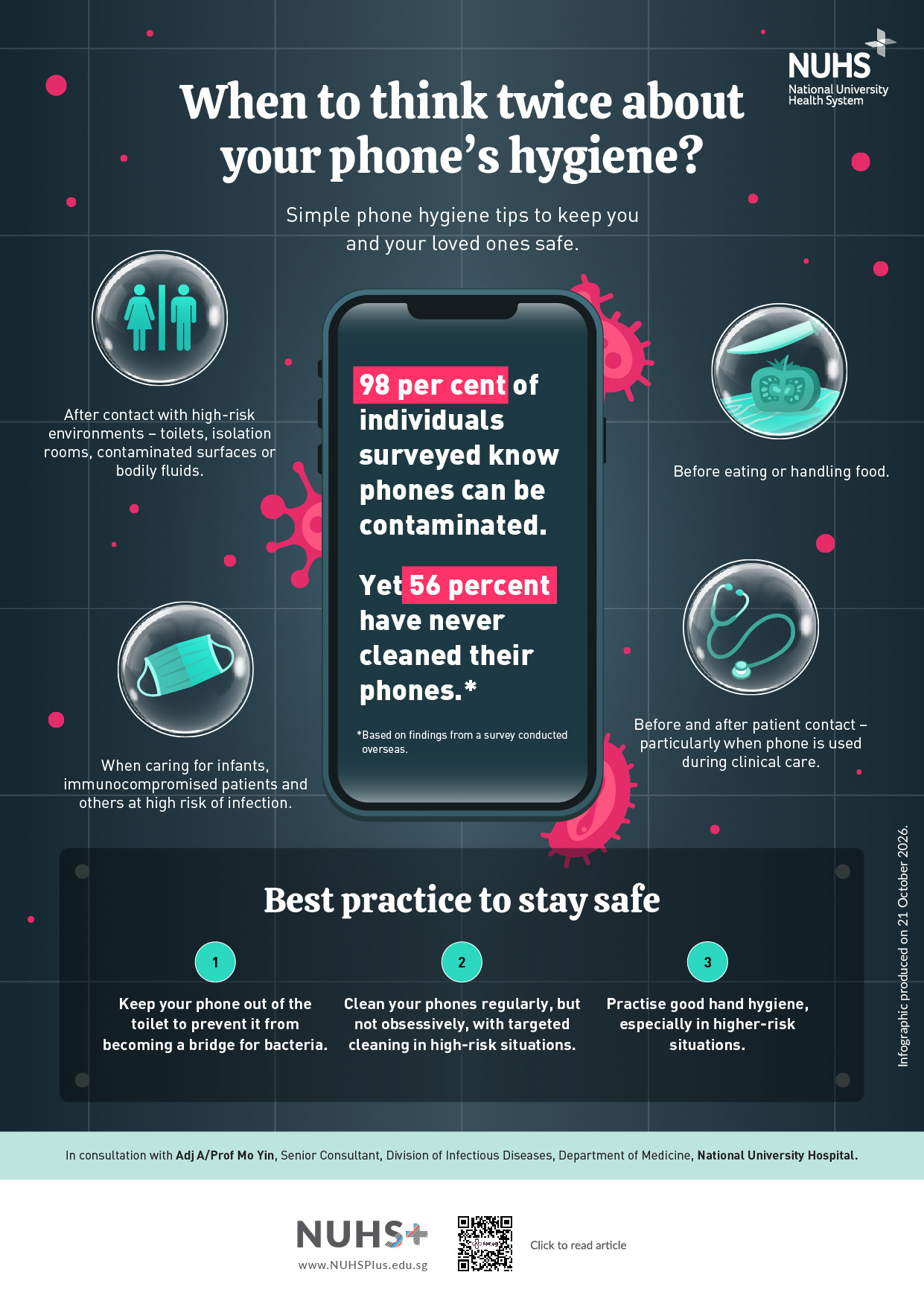
A study conducted overseas found that while 98 per cent of individuals believed phones could be contaminated, 56 per cent had never cleaned their devices.
How clean is clean enough
Contrary to popular belief, daily sterilisation of phones is unnecessary.
“Sterility is neither achievable nor necessary for personal phones. Regular cleaning, targeted disinfection in higher-risk circumstances and good hand hygiene are sufficient for most people,” said Adj A/Prof Mo.
These higher-risk situations include episodes of illness, caring for vulnerable individuals, handling food, visiting healthcare or residential care facilities, and disease outbreaks. Healthcare workers should also ensure good phone hygiene before patient contact or clinical care.
Adj A/Prof Mo advised people to keep their phones out of the toilet where possible and clean them regularly. This can be done using a compatible cleaning wipe or product. She also recommended removing the phone case periodically and cleaning it separately.
In consultation with Adj A/Prof Mo Yin, Senior Consultant, Division of Infectious Diseases, Department of Medicine, NUH.
Related Articles