Why the future of healthcare starts before you fall sick
Published on 14 August 2026
At a glance
- Preventive healthcare focuses on staying healthy and detecting problems before they become serious.
- Bringing care closer to the community allows residents to receive support in their neighbourhoods
- Individuals also play a key role through healthy habits, regular exercise, and health screenings.
Most of us only think about our health when something goes wrong. A persistent cough, unexplained pain or another worrying symptom is often what prompts a visit to the doctor.
By the time these symptoms appear, however, a condition you did not know you had may already have progressed for months or even years, increasing the risk of serious complications.
But what if the condition could be detected, or even prevented, before it reached that stage?
That shift from treating illness to preventing it lies at the heart of Singapore’s collective healthcare transformation. Instead of waiting for people to become patients, healthcare is increasingly focused on helping people stay healthy for as long as possible.
It is an approach that the National University Health System (NUHS) has embraced, said Asst Prof Andre Cheah, Chief of Population Health and Community Care at NUHS.
“Population health is the science and practice of improving the health or well-being of the population as a whole, not just treating individual patients,” he explained.
Catching health problems early
For Professor Aymeric Lim, Chief Executive Officer of the National University Hospital (NUH), the shift towards prevention complements the role of hospitals.
While hospitals will continue to care for patients who are seriously ill, preventing disease — or detecting it before complications develop — can help ensure hospital resources are available for those who need them most.
This is especially crucial as Singapore’s population ages.
“The older you are, the more healthcare problems you’ll have,” Prof Lim said, citing age-related conditions such as cataracts and knee problems that may eventually require medical care. “We need to preserve those resources for all patients who need it.
This shift contrasts starkly with how some diseases were detected in the past.
Prof Lim gave the example of someone with undiagnosed hypertension who might only discover the condition by chance during a routine visit to a GP for an unrelated illness. By then, the person could have been living with high blood pressure for five or even 10 years, potentially causing damage to the heart and brain.
Other conditions might only come to light after more-serious symptoms emerge and the patient requires emergency care.
The goal today, therefore, is to intervene much earlier.
“We have to move upstream and catch problems before they become serious,” Prof Lim said. “The best way of doing that is by staying healthy. If a problem does develop, the next line is screening.”
Bringing care closer to where people live
For preventive healthcare to be truly effective, care needs to extend beyond the walls of hospitals.
Acute hospitals are designed to treat patients who are unwell, drawing on specialised resources such as doctors, diagnostic scans, and operating theatres. In the community, however, healthcare teams have more opportunities to build longer-term relationships with residents, motivate them and support changes that can improve their health.
“If you’re talking about prevention and population health, and getting people healthy, activating them is the main thing to do,” Dr Cheah said. “And for that you need motivation. You need good relations. And I think the community is well placed to do that.”
While healthcare professionals are integral to keeping the community healthy, they are only one part of a much-wider support network.
Today, for example, family physicians can be supported by community nurses, social service agencies and Active Ageing Centres. Under Healthier SG, eligible residents can also enrol with a family physician and receive recommended screenings for conditions such as hypertension, diabetes and high cholesterol, as well as selected cancers.
Social service agencies and other community organisations may not have healthcare as their primary mission, but their reach and close relationships with residents mean they can play an important role in keeping people well.
Prof Lim noted that while some people are already knowledgeable and proactive about their health, others may need prompting, or require greater family and community support.
Therefore, NUHS works with healthcare and community partners to better coordinate support for residents.
For Dr Cheah, the effectiveness of that support ultimately comes down to something simple yet crucial: trust.
He cited the example of how a person might be more inclined to listen to a hairdresser they have known for years than a doctor they are meeting for the first time, even when the advice concerns their health.
The reason, he explained, is not expertise, but the trust built through years of regular interactions.
“It’s about relationships,” Dr Cheah said. “The more they interact with them and the more they help them — maybe not relating to health — the more the patient or the resident will trust them.”
Ideally, residents who are well can receive much of their care in the community. If they become unwell and require more-advanced treatment, they can be referred to the hospital at the appropriate time, before transitioning smoothly back to community care once their condition improves.
The aim, Dr Cheah said, is to ensure there are “no dropped balls” as people move between different parts of the healthcare system.
Taking a preventive approach
To make the concept of prevention easier to understand, Prof Lim used a familiar analogy: looking after your health is a little like looking after a car.
A responsible owner sends a car for regular servicing, allowing potential problems to be detected and repaired in a planned manner. The alternative is waiting until the car breaks down in the middle of the expressway.
Healthcare is much the same.
Regular screening can uncover problems before they cause serious complications, while healthy habits can reduce the likelihood of some problems developing in the first place.
It also changes the role healthcare workers play. Rather than only “repairing” people after something has gone seriously wrong, more doctors, nurses and allied health professionals can become involved earlier in helping people maintain their health.
And every interaction with a patient presents an opportunity.
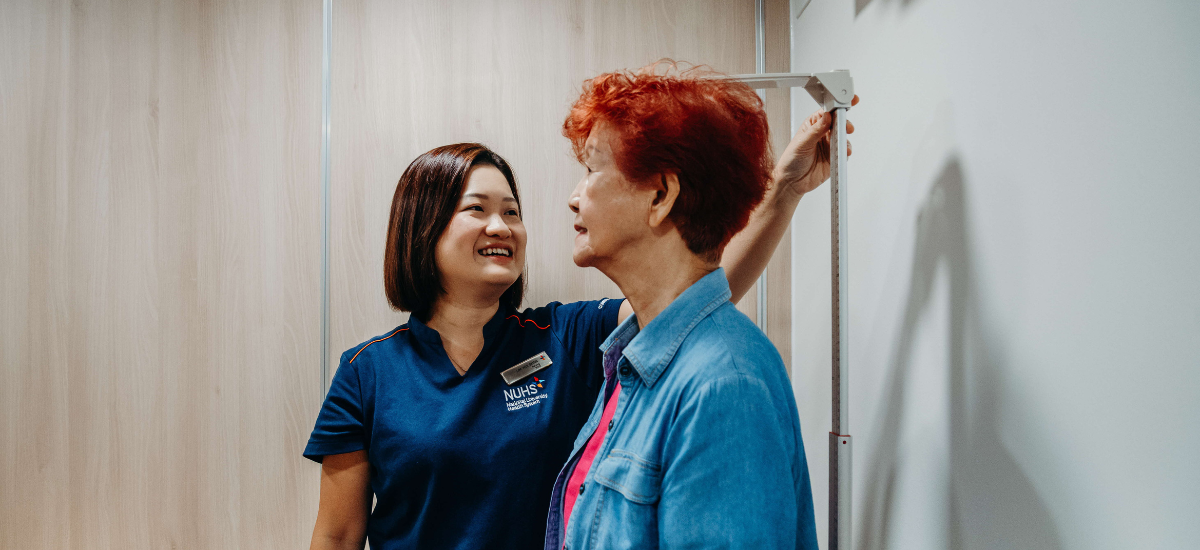
Healthcare workers do not necessarily need to deliver a lengthy lecture about healthy living, Dr Cheah said. Even taking 15 seconds to explain why controlling high blood pressure matters, for example, can encourage someone to take a more-active role in managing their health.
Investing in your health
Ultimately, however, preventive healthcare cannot be delivered by healthcare professionals and community organisations alone.
Individuals have a role to play too.
For Prof Lim, that can begin with straightforward lifestyle changes: maintaining a healthy weight and getting regular exercise.
Dr Cheah suggested thinking about health in the same way we think about other things we invest in for the future.
“Think of health like your bank account or your education. Learn endlessly, read voraciously, and invest in it,” he said. “We invest in our education. We invest in our long-term financial sustainability. We should likewise also invest in our health.”
That investment need not be complicated. Learning more about your health, adopting healthier habits, enrolling in Healthier SG if eligible and keeping up with recommended screenings are all ways to start.
After all, the best time to think about your health may not be when something goes wrong, but while you are still well.
In consultation with Prof Aymeric Lim, CEO, NUH, and Asst Prof Andre Cheah, Chief, Population Health and Community Care, NUHS.