What to know about sports injuries in children
Published on 29 March 2026
As more children take part in organised sports from a young age, related injuries are on the rise. Here is what parents should watch for, and how to keep young athletes safe.
At a glance
- Sports injuries are increasingly common among children, especially during growth spurts.
- Persistent pain is not always “growing pains” and may need early attention.
- Proper rest, training and variety in sports can help prevent many injuries.
From after-school football to weekend tennis lessons, sport is a big part of growing up in Singapore, and builds confidence, discipline and friendships.
But as training becomes more structured, and sometimes more intense, doctors are seeing a rise in injuries among young athletes.
At the National University Hospital (NUH), this is becoming an increasingly familiar trend.
“NUH frequently sees children with injuries related to sport participation. These children are typically in secondary school and injuries can occur across a wide age group,” said Adj Asst Prof Rishi Malhotra, Consultant, Division of Paediatric Orthopaedic Surgery, Department of Orthopaedic Surgery, NUH.
“In my clinic, up to 50 per cent of teenagers coming to see me for the first time have acute injuries or chronic complaints related to sport.”
Why growing bodies are more vulnerable
One key reason for sports injuries in children is that their bodies are still developing. Their bones are not yet fully mature, making certain areas more vulnerable than others.
“Children can have fractures through the relatively weak growth plates,” Adj Asst Prof Rishi explained.
While most of these heal well, more serious injuries can have lasting effects.
“More severe injuries can damage growth plates and cause the limb to stop growing. This can result in a shorter limb on one side, or to grow with an angulation, causing a deformity.”
There are also specialised growth areas where tendons attach to bones, known as apophyses. These can become irritated with repeated strain.
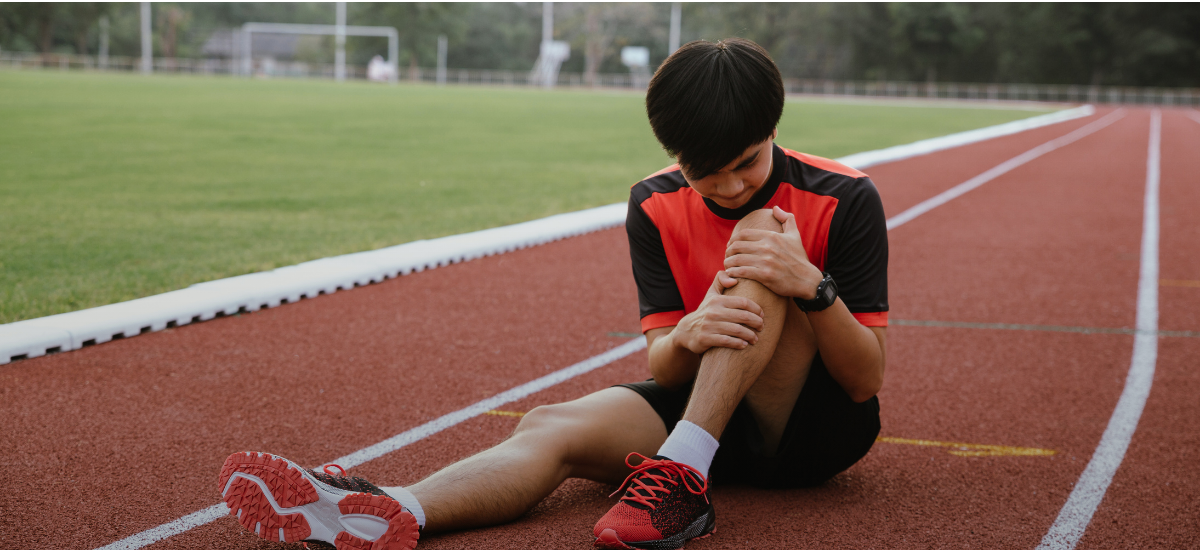
A common example is Osgood-Schlatter disease, which causes knee pain in children who run and jump frequently.
“This leads to chronic pain, which worsens after activities,” said Adj Asst Prof Malhotra. “Fortunately, in most people when their growth is complete and the growth plates have closed, the condition will no longer persist.”
More than just “growing pains”
It can be tempting to dismiss aches in active children as part of growing up. And in some cases, that is true.
However, pain in older children, especially those who are active in sports, should not always be brushed aside.
“Growing pains is a term often used to describe aches in the legs in preschoolers and primary school children. These aches tend to come in the evening and rarely limit them during sports,” Adj Asst Prof Rishi elaborated.
"But when there are aches and pains persistently, then the child may benefit from periods of activity reduction or modification, or modalities such as physiotherapy.”
While severe injuries may involve swelling or difficulty walking, some injuries are not as obvious, and can be more difficult to spot, especially if the child does not speak up about their pain.
“Children tend to be strongly motivated to continue with their sport and may put up with their discomfort or play it down,” he said.
As such, Adj Asst Prof Rishi advised parents to pay close attention to subtle warning signs of injuries, including persistent pain that does not improve, limping or reduced movement, swelling or bruising, and a feeling that the joint is unstable. Crucially, he urged parents to bring their child for treatment early if they suspect that something is not right.
“If the symptoms progress, or do not settle even with a few weeks of resting, then medical advice may be required,” he said. "The treatment may be a lot simpler when it is seen and treated within a few weeks than after many months.”
Common injuries in young athletes
Some injuries, including ankle sprains, fractures, and knee injuries such as dislocations or ligament tears, happen suddenly. Others, however, develop gradually over time.
“These are children who may have chronic knee pain, such as from patella tendinopathy (also known as jumper’s knee), or shoulder and elbow pain from racket sports," Adj Asst Prof Rishi shared.
While most overuse injuries improve with proper care, if they are left untreated for too long, they can lead to longer-term problems.
“Even with surgery, not everyone can get back to their usual level of sports and there may be long-term issues later in life as a result of these injuries," Adj Asst Prof Rishi noted.
Preventing injuries: small steps, big difference
The encouraging news is that many sports injuries are preventable if certain measures are taken. This can include wearing appropriate footwear for better shock absorption, using protective gear where needed, warming up properly before any activity, and allowing sufficient time for rest and recovery.
Playing a variety of sports can also help, as Adj Asst Prof Rishi explained, “Overuse injuries are more likely if children focus on only one sport all year round, so participation in multiple types of sport avoids overuse strain to a particular part of the body.”
And for those pursuing competitive sport, proper guidance is key.
“They should follow the appropriate guidance from experts on technique and general conditioning, to prepare their body for the intense training.”
As sport remains an important and positive part of childhood, the goal is not to discourage participation, but to ensure that children can continue doing what they love without long-term harm.
And with closer attention to warning signs, the right balance between training and recovery, injuries can be managed and often prevented.
In consultation with Adj Asst Prof Rishi Malhotra, Consultant, Division of Paediatric Orthopaedic Surgery, Department of Orthopaedic Surgery, NUH.