Understanding a fast-moving cancer of the blood
Published on 9 March 2026
Acute myeloid leukaemia is an aggressive condition that needs swift diagnosis and specialist treatment. Here’s what affects outcomes and what care typically involves.
At a glance
- Acute myeloid leukaemia (AML) is a rare but aggressive blood cancer that can worsen rapidly without early treatment.
- Early symptoms are often subtle, which can lead to delays in diagnosis and treatment.
- Treatment typically involves chemotherapy, with stem cell transplant offering a potential cure for some patients.
Feeling unusually tired or weak, becoming short of breath or picking up frequent infections are symptoms many people might dismiss as flu, stress or ageing.
But in some cases, these vague signs can point to acute myeloid leukaemia (AML), a rare cancer of the blood that develops in the bone marrow. While uncommon, AML is one of the most aggressive forms of leukaemia in adults and can progress rapidly without treatment, making urgent specialist care essential.
Dr Melissa Ooi, Senior Consultant, Division of Haematology, Department of Haematology-Oncology, National University Cancer Institute, Singapore (NCIS), said AML mainly affects older adults. It can also be difficult to identify early because its symptoms often resemble those of more common illnesses, which can delay diagnosis.
At NCIS, which treats patients from across Singapore, about 100 new AML cases are diagnosed each year. Understanding the basics of AML, such as how the disease develops, how it is diagnosed and how it is treated, can help patients and families make sense of what is often a sudden and overwhelming situation.
What happens?
AML affects the blood and bone marrow. It begins when myeloid cells – early blood-forming cells – do not develop as they should. In a healthy body, these immature cells mature into red blood cells, white blood cells and platelets. In AML, however, that process breaks down.
“The abnormal white cells get stuck at an immature state and then multiply uncontrollably,” Dr Ooi said. “This causes the normal blood cells to decrease, which is why you get low red blood cells, low platelets and low healthy white blood cells.”
When healthy blood cells fall, people may feel unusually tired or weak, become short of breath, lose weight without trying, run a persistent fever, or be told they have abnormal blood test results.
The challenge is that these signs are not specific and may be mistaken for other issues such as iron-deficiency anaemia, bleeding disorders, autoimmune diseases or viral infections. This overlap makes it even more important to understand who is more likely to be affected.
AML is more common in adults than in children, and the risk rises with age. Certain factors, including prior chemotherapy, radiation therapy or radiation exposure, can also increase risk.
The disease can develop from other blood disorders such as myelodysplasia, myelofibrosis and myeloproliferative neoplasms.
For most patients, however, no clear cause is found.
|
Common warning signs of AML include:
These symptoms are non-specific and may resemble other conditions, making further investigation essential when they persist. |
From diagnosis to first-line treatment
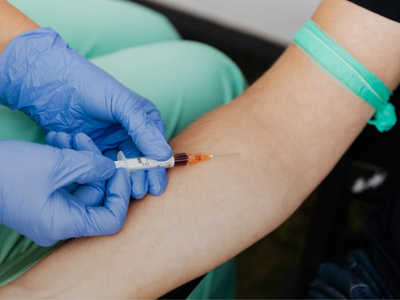
A bone marrow procedure is needed to diagnose AML. Samples are taken for a range of tests, including aspirate examination, flow cytometry, cytogenetics, molecular testing and trephine biopsy.
Dr Ooi said the diagnostic process takes place in stages. “The finalised bone marrow report will come back within a week, while the other tests may take up to one month,” she said.
Treatment planning depends on multiple factors, including a patient’s medical history, organ function, genetic features of the disease and overall fitness.
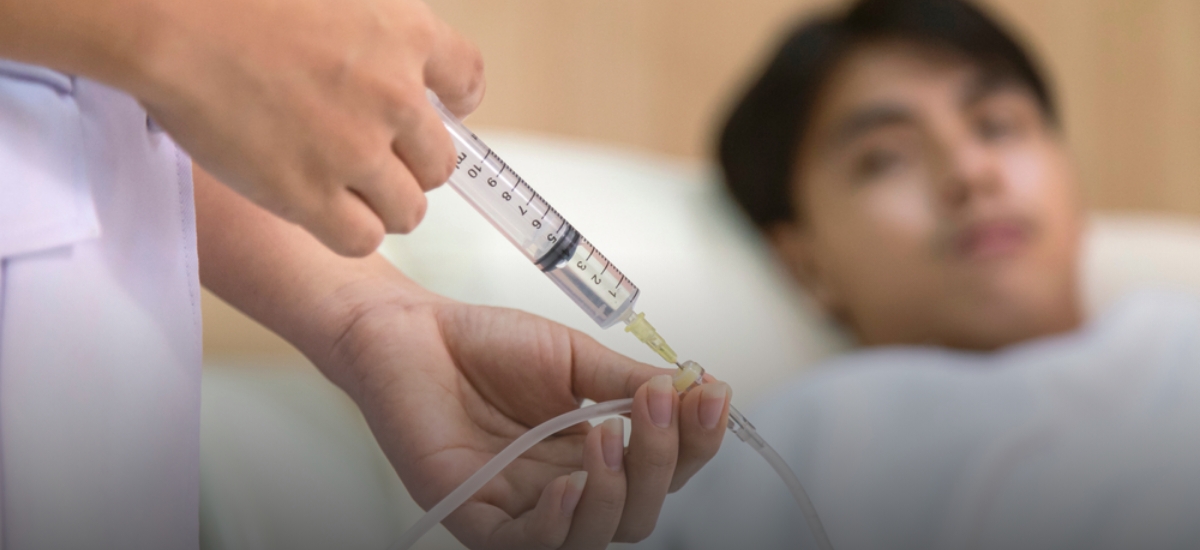
For many patients, chemotherapy is the main initial treatment. The first cycle is usually given in hospital, and patients may stay for about a month so the healthcare team can closely monitor side effects and complications.
Common side effects include low blood counts, fatigue, fever, nausea or vomiting, loss of appetite, and diarrhoea. Supportive care often involves blood and platelet transfusions, frequent blood tests and antibiotics if infections occur.
For patients aged 65 and above, treatment decisions at NCIS are supported by a comprehensive geriatric assessment under the Geriatric Oncology Longitudinal End-to-End (GOLDEN) programme.
This looks at frailty and the likelihood of chemotherapy toxicity to help doctors determine whether someone is fit for intensive treatment. NCIS is currently the only centre in Singapore offering this specialised assessment.
Transplant as cure
Chemotherapy is central to AML treatment, but for most patients, a bone marrow or stem cell transplant remains the only known cure.
“A bone marrow transplant or stem cell transplant is the only known cure for AML, except for a specific subtype,” Dr Ooi said. In this good-risk subtype, chemotherapy alone is usually enough to achieve a cure.
A stem cell transplant replaces diseased bone marrow with healthy stem cells, allowing the body to produce normal blood cells again. Whether to proceed depends on disease risk, how well a patient responds to initial treatment and overall fitness.
Even after successful treatment and remission, relapse remains a concern. “In general, there is about a 30 per cent chance of relapse for AML patients on average,” Dr Ooi said, adding that the risk varies depending on the type of AML and prior treatments.
After treatment, patients are followed up in the clinic with regular blood tests. Some may need maintenance therapy and monitoring for minimal residual disease – which can signal that leukaemia is returning – so doctors can intervene early.
In consultation with Dr Melissa Ooi, Senior Consultant, Division of Haematology, Department of Haematology-Oncology, NCIS.
Related Articles