NUHS’s new AI-powered platform: Transforming key pharmacy workflows
Published on 4 August 2026
The National Cluster AI in Pharmacy platform brings together four smart tools to reduce manual workload across medication reconciliation, triage and verification.
At a glance
- Across NUHS, pharmacists spend 850 hours per week on medication reconciliation, triage and verification.
- By automating manual pharmacy processes, it frees up pharmacists to take on higher-value clinical work.
- At full deployment, the platform is expected to garner up to $2 million in cost savings.
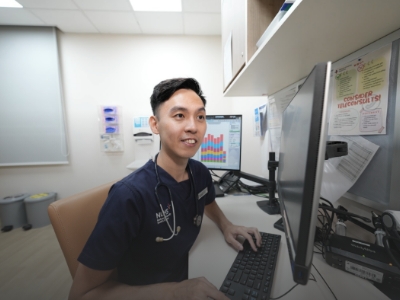
When a patient at the National University Hospital (NUH) was prescribed metoclopramide and olanzapine, MedVerify, one of the tools in the new National Cluster AI in Pharmacy (NCAIP) platform, automatically flagged this medication order for pharmacist review.
When taken together, metoclopramide, an antiemetic medication, and olanzapine, an antipsychotic medication, may cause movement disorders.
Each day, pharmacists across the National University Health System (NUHS) review almost 6,600 medication orders, a critical patient safety process in which pharmacists assess prescriptions for appropriate dosing, contraindications and drug interactions, highlighting cases that require intervention.
Medication verification is conventionally a manual and time-consuming process, taking up about 310 manhours per week across NUHS pharmacies.
Concurrently, pharmacists also conduct medication reconciliation and medication counselling, with NUHS seeing about 730 medication reconciliations for admissions and discharges, and about 6,500 medication counselling sessions every day.
Together, these activities require about 173 manhours daily.
Addressing pharmacists’ daily challenges
Beyond sheer volume, the nature of these daily tasks also presents challenges of their own — pertinent patient information such as medication history, notes, orders and lab results is often scattered across different repositories, requiring pharmacists to manually toggle and cross-check across sources.
Collectively, this creates significant cognitive burden, slows down the clinical process and takes pharmacists away from higher-value roles that they could be focusing on, including leading transdisciplinary care for chronic conditions such as heart failure, diabetes and renal disease.
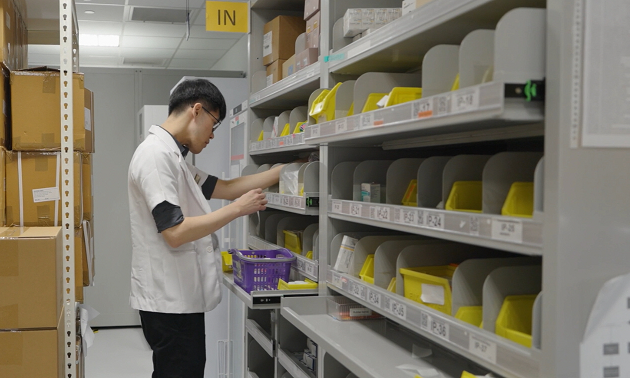
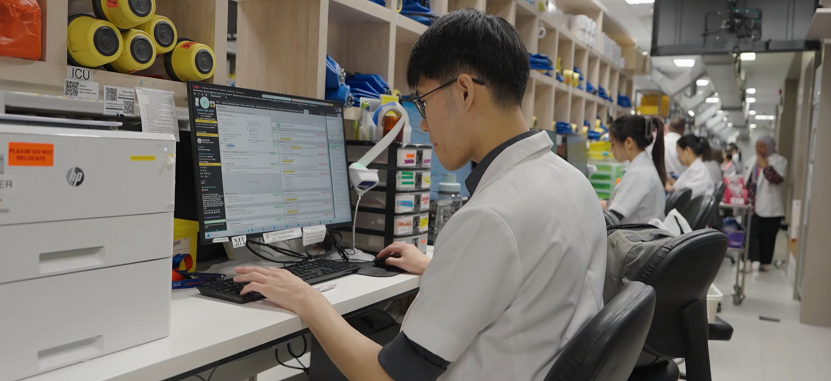
Each day, pharmacists across NUHS handle high volumes of medication orders, verification and counselling, key processes that are increasingly difficult to sustain with a shrinking workforce.
“The NCAIP platform was conceived in June 2024 during a period when healthcare organisations worldwide were exploring how artificial intelligence could help address increasing workload pressures and workforce challenges,” explained Mr Tan Chwee Huat, Project Director for NCAIP and Consultant Pharmacist, Alexandra Hospital (AH).
“However, rather than adopting AI for its own sake, the NUHS pharmacy teams came together and adopted a deliberate approach by first identifying areas where AI could create the greatest value for patients and healthcare professionals.”
These day-to-day pressures became the starting point for the NCAIP platform, which encompasses Admission MedRecon, Discharge MedRecon, MedTriage and MedVerify to automate and streamline medication reconciliation, counselling and verification.
An intricate plumbing system: ENDEAVOUR AI and Horus
The journey from securing internal approval for NCAIP to developing and validating the tools took just nine months, made possible in part by the platform’s ability to leverage NUHS’s existing ENDEAVOUR AI and Horus infrastructure.
The ENDEAVOUR AI system enables real-time data integration across systems, serving as a scalable foundation that allows new pharmacy AI tools to be developed, piloted and introduced over time. On the other hand, Horus helps teams to derive insights from clinical data and build actionable algorithms for clinical decision support.
“By combining the capabilities of ENDEAVOUR AI with pharmacists’ clinical expertise and established workflows, we were able to develop AI tools that assist our pharmacists with medication reconciliation and verification,” explained Dr James Lee, Project Technical Director for NCAIP and Deputy Group Chief Technology Officer, Artificial Intelligence Office, NUHS.
“Importantly, while AI is smart, it can only be used in real-world settings with validation by actual humans on the ground with professional knowledge.”
“That anchored our development process from the start — anything we build must be able to withstand the rigour and scrutiny required for deployment in a real-world clinical setting and ultimately support better care for our patients.”
Validation completed, enroute to roll-out
After 18 months of ideation, development and rigorous testing, the NCAIP team has completed Phase 1 validation studies for the platform.
Across the four tools, validation results have been encouraging. MedTriage achieved 100 per cent accuracy, demonstrating its ability to consistently identify patients who require pharmacist counselling, and those who may be suitable for alternative collection pathways, including home delivery or self-collection from medication lockers.
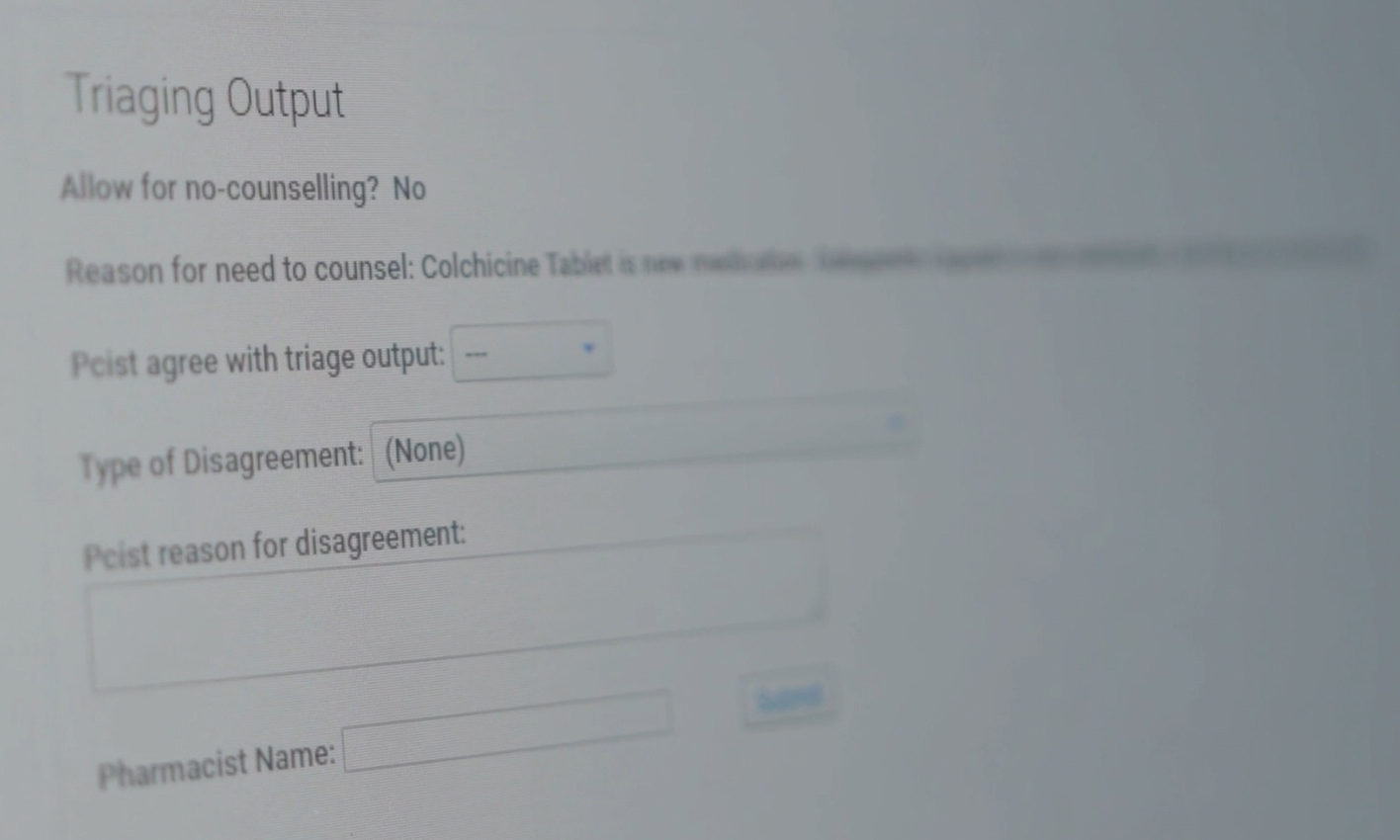
MedTriage identifies patients who require in-person counselling, such as those who have been prescribed new medications.
For medication reconciliation, Admission MedRecon achieved 88.0 per cent accuracy while Discharge MedRecon achieved 90.5 per cent accuracy during Phase 1 validation. The tools also demonstrated strong performance in identifying medication differences and the clinical reasons behind medication changes, achieving accuracies of more than 92 per cent to 95 per cent.
These capabilities help pharmacists navigate increasingly complex medication histories and support more-personalised patient counselling during transitions of care.
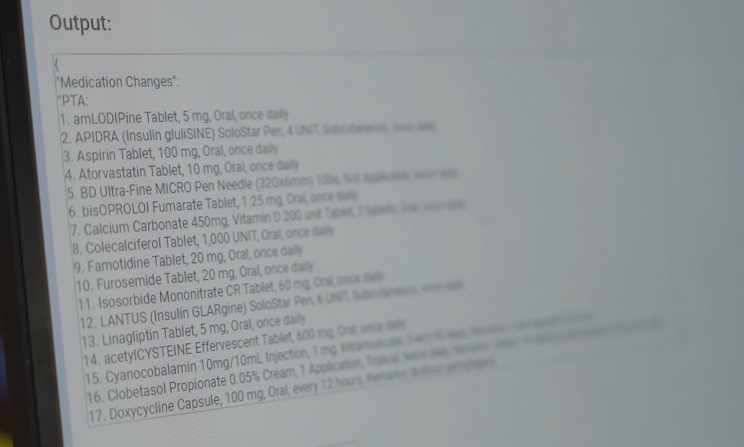
Admission MedRecon and Discharge MedRecon trawls through different information respositories and identifies medication changes.
Meanwhile, MedVerify, which reviews medication orders for dosing appropriateness, contraindications and drug interactions, achieved about 95 per cent accuracy in pre-validation testing.
With these encouraging results under its belt, the NCAIP team aims to roll out the tools across the cluster progressively from end of 2027. The eventual goal is to save up to 850 pharmacist manhours each week across NUHS, allowing pharmacists to advance their expertise towards complex clinical care, multidisciplinary ward rounds and new areas of practice.
“Ultimately, these tools are designed to become great companions for clinical pharmacists, supporting patient care,” said Dr Lim Siew Woon, Project Sponsor for NCAIP and Head of Pharmacy, NUH. “Our goal is to enable patients to use medicines more safely and to access their medications faster through smarter pharmacy flows.”
“By helping pharmacists assess patient information faster, spot prescriptions that require closer attention and streamline routine processes, they can prioritise their work better. Most importantly, pharmacists will be able to spend their precious time with patients who need their care most.”
Looking ahead, the NCAIP team is exploring opportunities to collaborate with other public healthcare clusters and national partners to expand the platform’s reach.
As AI capabilities continue to evolve, the NCAIP platform is intended not only to support current pharmacy services, but also to lay the foundation for the healthcare workforce of the future, where pharmacists can practise at the top of their license and focus more on delivering complex, personalised and high-value patient care.
In consultation with Dr James Lee, Project Technical Director for NCAIP and Deputy Group Chief Technology Officer, Artificial Intelligence Office, NUHS; Mr Tan Chwee Huat, Project Director for NCAIP and Consultant Pharmacist, AH, and Dr Lim Siew Woon, Project Sponsor for NCAIP and Head of Pharmacy, NUH.
Related Articles