NUCOT celebrates 25 years of new hope after organ transplantation
Published on 26 April 2026
NUCOT recently commemorated its Silver Jubilee, a milestone for the centre and its patients, with survival outcomes consistently surpassing international benchmarks.
At a glance
- At NUCOT, the 10-year survival rate for adult patients who underwent a living donor kidney transplant is 90 per cent, compared to 82.7 per cent in the United States (US) and 86 per cent in Australia/New Zealand.
- For adult patients who underwent a living donor liver transplant, the 10-year survival rate is 78 per cent, compared to 67.9 per cent in the US and 61 per cent in Europe.
- NUCOT’s paediatric kidney patient survival at 10 years is 92.9 per cent, compared to 90.5 per cent in the US and 74 per cent in Europe.
- The 10-year survival rate for paediatric patients who have received a liver transplant is 82.2 per cent, while it is 70 per cent in the US and 75.8 per cent in Europe.
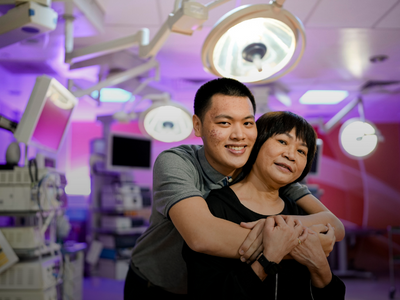
Mdm Leong Kwai Sin, 69, was just 28 years old when she underwent a kidney transplant at the National University Centre for Organ Transplantation (NUCOT) in 1985, due to kidney failure.
The second lease of life enabled Mdm Leong to experience the full arc of life’s seasons – including a cherished hope of motherhood. At 41 years post-transplant, Mdm Leong is one of NUCOT’s longest surviving patients, thanks to the centre’s holistic, multidisciplinary care, and her own dedication to leading a healthier lifestyle.
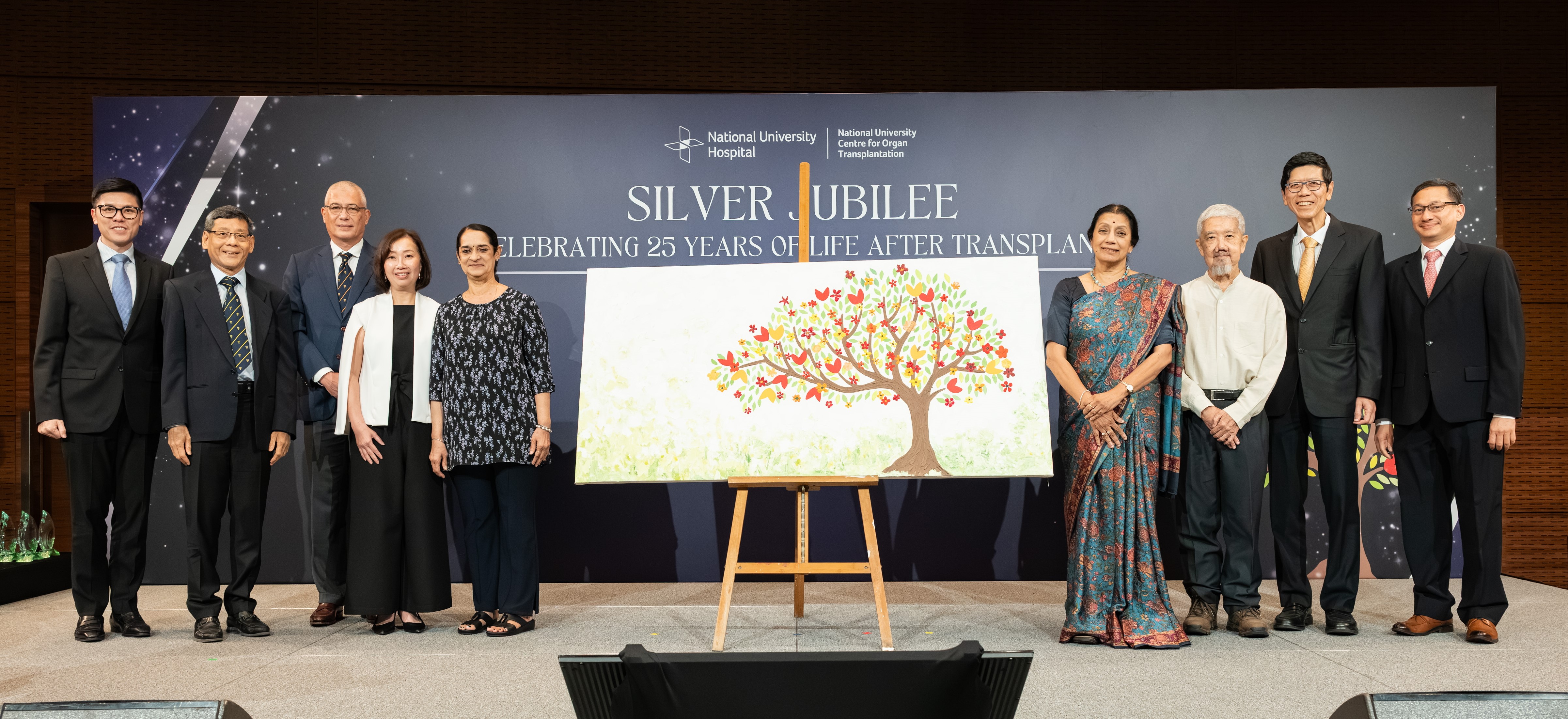
Mdm Leong was one of the 35 patients who attended the NUCOT’s Silver Jubilee “Celebrating 25 years of life after transplantation” on 27 March 2026, to commemorate recipients who have survived at least 25 years after their transplant. The event was also attended by their living donors, loved ones and the multidisciplinary healthcare team.
“After my successful kidney transplant, I felt that it was the beginning of a new life, with new hopes and dreams,” said Mdm Leong. “I had always wanted to start a family – and I am especially grateful to Prof A Vathsala (Director, NUCOT, Head & Senior Consultant, Department of Medicine, NUH), for her support and for tailoring my post-transplant care to make sure I was healthy enough to conceive.”
Mdm Leong eventually welcomed two healthy children, within 10 years of her kidney transplant.
Surpassing international benchmarks in survival outcomes
Since 1987, NUCOT has successfully carried out over 900 kidney and 500 liver transplants on both adult and paediatric patients and remains Singapore’s only centre performing paediatric solid organ transplants.
Globally, a kidney from a deceased donor typically lasts about eight to 12 years after being transplanted, before it fails, or the patient dies. Conversely, such transplant patients at NUCOT survive an average of 15 years and continue to have a functional kidney.
For kidney transplants from living donors, NUCOT patients survive an average of 31 years, with the transplanted kidney remaining functional. This is significantly longer than global figures, which show that such grafts typically fail after 15 to 20 years.
Similarly strong outcomes were seen in adult liver transplants at NUCOT – while liver grafts worldwide generally last 10 to 20 years, NUCOT’s results surpass international benchmarks.
A formula that works
Behind these strong survival outcomes and the precious gift of health for transplant patients, is a winning formula of a cohesive multidisciplinary approach and advances in the field of organ transplantation.
“As the primary transplant physician in charge, we not only have to manage our patients’ transplant, but also their immunosuppressants and other chronic conditions,” Prof Vathsala explained. “If patients have high blood pressure, diabetes, high cholesterol, we manage the bulk of these conditions.”
The multidisciplinary team at NUCOT provides holistic patient management, including tailored immunosuppression protocols, follow-up for life after transplant, as well as education on medication adherence and lifestyle modifications post-transplants.
“We work with our coordinators and nurses to manage overall care for patients,” Prof Vathsala said. “For instance, our nurses in NUCOT can guide patients with diabetes on continuous glucose monitoring and monitoring the condition of their feet.”
The intricate network of care also includes close collaboration with healthcare professionals across disciplines, to manage varied patient needs. “We have built a multidisciplinary team of experts, who know the complications that may occur in transplant patients,” Prof Vathsala explained. “For example, if a patient is expecting, we will consult with obstetricians who are trained to manage high-risk pregnancies.”
NUCOT has also incorporated the latest advances in transplant medicine such as advanced tissue typing and antibody assessment methodologies, molecular biological approaches to assess infections and rejection, the latest perfusion technologies to better preserve organs, as well as modern methods to perform complex procedures such as blood group incompatible transplants.
A leading hub in transplant medicine
The momentum that continues to shape advances at NUCOT was paved by the breakthroughs and dedication of earlier pioneers, dating back to Singapore’s first deceased donor kidney transplant in 1970, which was led by Prof Chan Kong Thoe, who was head of the then University of Singapore’s Professorial Surgical Unit.
This year also marks the 50th anniversary of the first living donor kidney transplant, led by Profs Ong Siew Chey, Foong Weng Cheong and Abu Rauff in 1976 – a landmark milestone further honoured by Prof Abu Rauff’s attendance at NUCOT’s Silver Jubilee event.
Beyond medical care, NUCOT also serves as a key hub for clinical training and research in Southeast Asia. Its commitment to education, innovation, and regional collaboration enables the centre to provide advanced treatments and foster expertise in organ donation and transplantation.
As NUCOT marks the 25-year milestone of post-transplant life with its patients, it remains committed to advancing transplant medicine, to transform lives for generations to come.
Byline
In consultation with Prof A Vathsala, Head & Senior Consultant, Department of Medicine, National University Hospital