Listening first: Designing nursing tech that works
Published on 26 March 2026
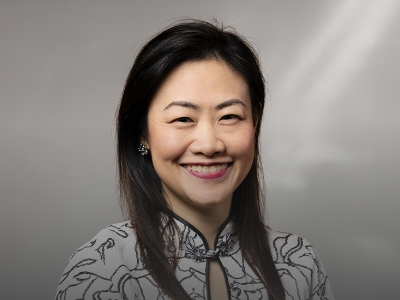
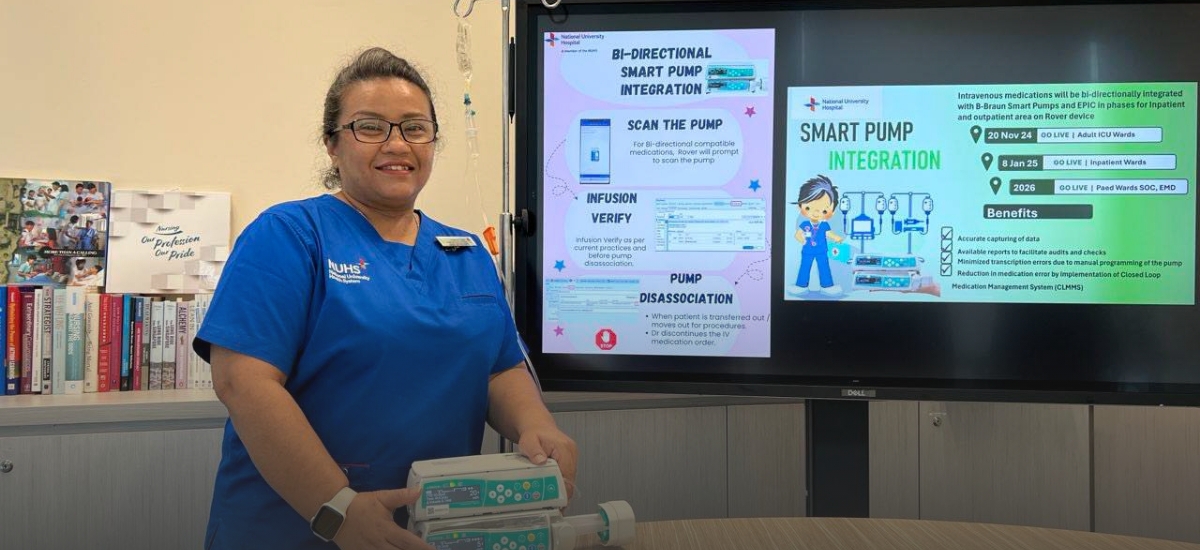
As Assistant Director of Nursing (Nursing Informatics) at NUH, Ms Theresa Samy works alongside ward nurses to design digital tools that are practical, intuitive and centred on patient care.
At a glance
- Nursing technology works best when it is shaped by the people who use it every day.
- Simple, practical tools can save time and reduce paperwork, giving nurses more time with patients.
- Listening to frontline staff ensures technology supports care rather than complicates it.
Nurses are often the first and last point of contact for patients in hospital. They coordinate care, monitor changes and ensure that plans are carried out safely.
And Ms Theresa Samy’s work sits right at the heart of care, bringing together nursing practice and digital innovation in ways that make a real difference.
“I harness technology and innovation to simplify and support clinical nursing work,” she said. “My role is about bridging clinical practice, technology and policy.”
As Assistant Director of Nursing (Nursing Informatics) at National University Hospital (NUH), Ms Samy leads efforts to improve how nurses use digital systems in their daily work. She also works closely with nursing leaders and frontline teams to design care processes that are enabled by technology and guided by clinical needs.
How it all started
For Ms Samy, the impact of digital health records became clear in a single patient encounter she has never forgotten.
“I vividly remember assisting a doctor with a patient who could not clearly explain her long-term medical conditions,” she said.
As this happened during the rollout of Singapore’s National Electronic Health Record (NEHR), the care team was able to use the system to quickly access the patient’s full medical history.
“That enabled us to design a safe and holistic treatment plan,” she said. “The experience reinforced my belief that technology, when supported by strong policies, can bridge gaps and deliver high-quality, patient-centred care.”
Since then, her focus has been clear: build tools that make work easier for nurses and safer for patients.
Her team has introduced multilingual patient applications, speech-to-text tools that reduce manual typing, and an in-house fall risk predictor that helps staff identify patients who may be at higher risk of falling, thus allowing for earlier intervention.
A key priority has been reducing paperwork, which has long been recognised as one of the biggest pressures on nursing time.
“We introduced automated templates and shortcuts within the electronic medical record system to reduce documentation burden,” she explained. “This resulted in a saving of about 120 nursing hours across institutions within the National University Health System (NUHS).”
And for nurses, that time saved can be redirected to what matters most: patient care.
Listening to the ground
For Ms Samy, successful digital innovations begin with listening.
“We build based on real needs on the ground,” she said. “The nurses who use these systems every day must have a strong voice in shaping them.”
As such, her team gathers feedback through surveys and regular discussions, and works with nursing representatives from different clinical areas. Tools are refined continuously based on both staff feedback and usage data.
“We have nurses who champion new technologies, with dedicated time set aside for some initiatives,” she added.
When problems arise, they are addressed openly. Nurses are also encouraged to speak up about what is not working and what could be improved.
“We provide a safe space for them to highlight challenges and share how they envision solutions,” she said.
Nurses also collaborate closely with IT colleagues as solutions are tested and improved. Over time, this feedback loop has shifted the focus away from adding complex features and towards creating systems that are intuitive and efficient – with fewer clicks, clearer navigation and simple accessibility features such as adjustable font sizes.
The people factor
When asked what advice she would give to someone interested in a similar role, Ms Samy’s answer is straightforward: start with people.
“We must measure success beyond numbers,” she said. “It is about meaningful impact and that begins when we prioritise people at the centre of our decisions.”
Her motivation comes from the nurses navigating busy wards, patients who provide candid feedback and colleagues who strive to improve systems without compromising on ethics or compassion.
In the end, she believes that technology must justify its presence in healthcare.
“These experiences have reinforced our understanding that simplicity often outweighs sophistication,” she said. “Empathy must guide design. When we actively listen and observe real-world use, we ensure that technology supports care rather than complicates it.”
In consultation with Ms Theresa Samy, Assistant Director of Nursing (Nursing Informatics), NUH. Ms Samy was featured in GovInsider’s Women in GovTech 2025 report, which spotlights innovators reshaping how public services are delivered.