Late nights, insomnia: How can we get better sleep?
Published on 4 May 2026
A multitude of reasons surround the complex issue of poor sleep, which may include high stress levels, genetic predispositions and lifestyle factors.
At a glance
- Adults should strive to get seven to nine hours of uninterrupted sleep each night.
- Poor sleep quality despite adequate hours of sleep could indicate sleep apnoea.
- Stress levels among Singaporeans are higher than the global average, which also impacts sleep quality.
In Singapore, where hectic work schedules, family commitments and round‑the‑clock digital access are the norm, sleep is often relegated to a distant second. Despite significant awareness of good sleep habits, poor sleep remains common in Singapore.
Sleep is vital for our overall well-being and has an extensive impact on our performance at work or school, social relationships, as well as physical and mental health.
While there may be a myriad of reasons behind poor sleep, including lifestyle factors, some are more insidious and silent – like undiagnosed sleep apnoea.
Understanding both our sleep habits and possible underlying conditions, and seeking timely medical attention may enable early intervention. The Sleep Centre at the National University Hospital (NUH) adopts a multidisciplinary approach for optimal care, by addressing different aspects of sleep disorders.
Cultivating good sleep habits
A study by international market research company YouGov found that less than half of residents in Singapore (44 per cent) get an average of seven or more hours of sleep each night. About one-fifth of residents polled said they typically sleep five hours or less.
Popular sleep hacks that were cited in the study include consistent bedtime, upgrading pillows and mattresses, and avoiding digital screen exposure before going to bed. “The sleep hacks cited are relatively simple and appropriate techniques to optimise sleep, but some conditions go deeper than what a comfortable sleep environment physically and good sleep hygiene can solve,” explained Dr Crystal Cheong, Senior Consultant, Department of Otolaryngology - Head & Neck Surgery (ENT), NUH.
“Busy professionals or those with family commitments may undertake revenge bedtime procrastination, to try to ‘reclaim’ some ‘me-time’ for self-care or relaxation late at night, even when they feel tired and should recharge by sleeping instead,” Dr Cheong said.
“Many Singaporeans spend a lot of time on their digital devices for work and relaxation. The widespread accessibility to technology even among older individuals predisposes to constant scrolling or watching of videos into the wee hours of the morning, to the point that it is often used as an aid to fall asleep.”
Unfortunately, the blue light emitted by these electronic devices can be detrimental to sleep quantity and quality, and the constant mental stimulation may not be helpful for winding down.
The issue of inadequate sleep extends beyond busy working adults – similar trends are also observed among children in Singapore, hinting at cultural factors at play. “It is well-documented in studies that Singaporean children go to bed later and wake earlier than many children worldwide, especially compared to their Western counterparts,” Dr Cheong explained. “Singaporean children tend to clock fewer hours of sleep than what is recommended for healthy development, a lifestyle habit that perpetuates into adulthood.”
Deeper issues at play
If simple changes to your sleep environment and habits are not particularly effective and translating to adequate daytime energy levels or feeling well rested upon waking, it may be worthwhile to consider the following:
- Number of hours of sleep each night: Inadequate total sleep time will result in fatigue especially if this occurs repeatedly, and if there is no opportunity to catch up on prior sleep deprivation
- Chronic insomnia: Cognitive behavioural therapy for insomnia (CBT-I) is a well-documented and effective method of breaking the cycle of chronic insomnia. It is typically conducted as a series of sessions by a sleep-trained professional to help a person reset their sleep-wake cycle and change their mindset about sleep.
- Sleep disorders such as obstructive sleep apnoea (OSA): Poor sleep quality despite sufficient hours of sleep could suggest that OSA is present, especially if there are other symptoms such as habitual snoring, breathing interruptions noted by a bed partner, or choking in your sleep.
Sleep disorders
Sleep apnoea is a relatively common sleep disorder – a population study conducted in 2012 found that around 30 per cent of adults had moderate to severe OSA, of which 91 per cent were unaware of their diagnosis prior to performing a sleep study. This may partly be due to the lack of obvious symptoms, or the perception that snoring during sleep is normal, or expected.
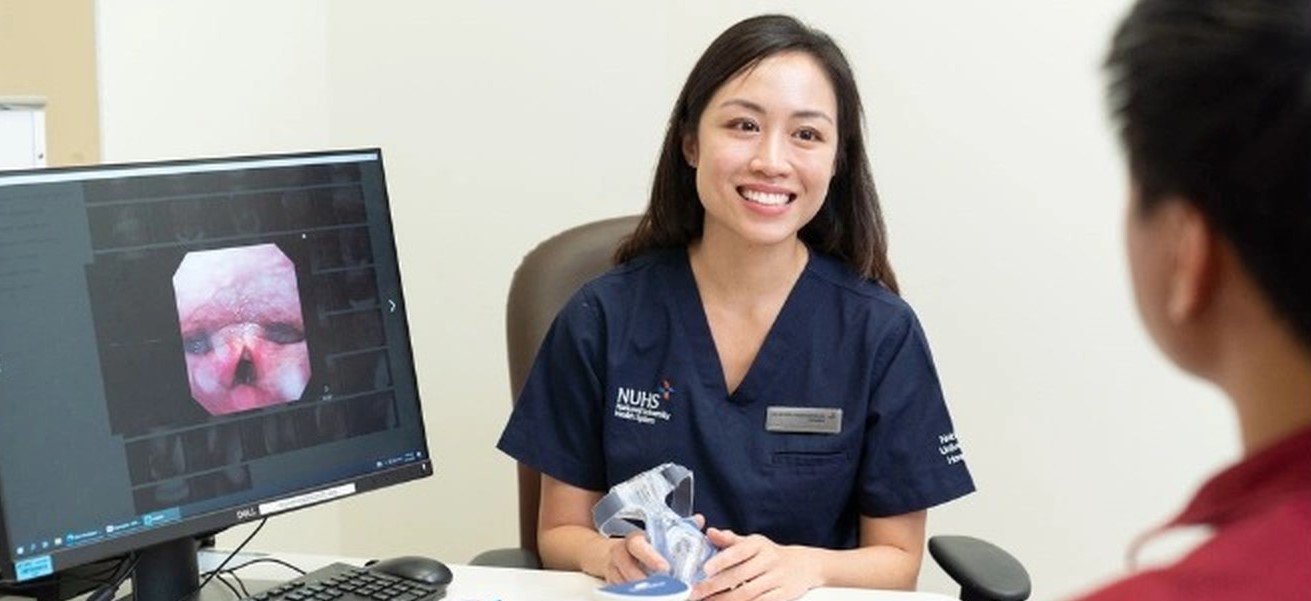
There are various types of sleep apnoea, with the most common being OSA. “OSA is a medical condition in which the upper airway collapses during sleep despite the patient’s attempts to breathe,” Dr Cheong explained. “This can lead to drops in blood oxygen levels, fragmented sleep in the brain, and even awakenings in the middle of sleep.”
A patient with OSA typically exhibits night-time symptoms like loud habitual snoring, choking or gasping in sleep, and/or witnessed apnoeas (breathing interruptions). They may also frequently experience sleepiness during the day.
Interestingly, there may also be a genetic component at play when it comes to OSA. “Singaporeans are genetically more predisposed to a narrower airway for breathing, because of a tendency to have anatomical features such as a small and retruded lower jawbone,” Dr Cheong elaborated. “Coupled with increasing obesity rates, which increase unnecessary bulkiness in the mouth and neck, the upper airway ends up being prone to obstruction upon falling asleep, leading to poorer sleep.”
Fortunately, there are effective treatment options for patients with sleep apnoea. “Continuous positive airway pressure (CPAP) therapy is the first-line treatment as it is extremely efficacious at ensuring smooth airflow and stabilising the upper airway muscles,” Dr Cheong explained. “For OSA, oral appliances worn during sleep and surgery on the upper airway are alternatives for patients who cannot tolerate CPAP.”
In consultation with Dr Crystal Cheong, Senior Consultant, Department of Otolaryngology - Head & Neck Surgery (ENT), NUH.
Related Articles