How Community Care nurses are reshaping health in the heartlands
Published on 19 May 2026
Within the Healthy Precinct model, NUHS Community Care is supporting residents beyond clinical care, focusing on prevention, early action, and long-term health in familiar neighbourhood spaces.
At a glance
Care in familiar neighbourhood spaces help residents to feel at ease, allowing for honest conversations about health.
Being present in the community means nurses can spot early warning signs before they become crises.
- By operating in familiar neighbourhood spaces like Active Ageing Centres, NUHS Community Care integrates health, social, and lifestyle support where residents already feel at home.
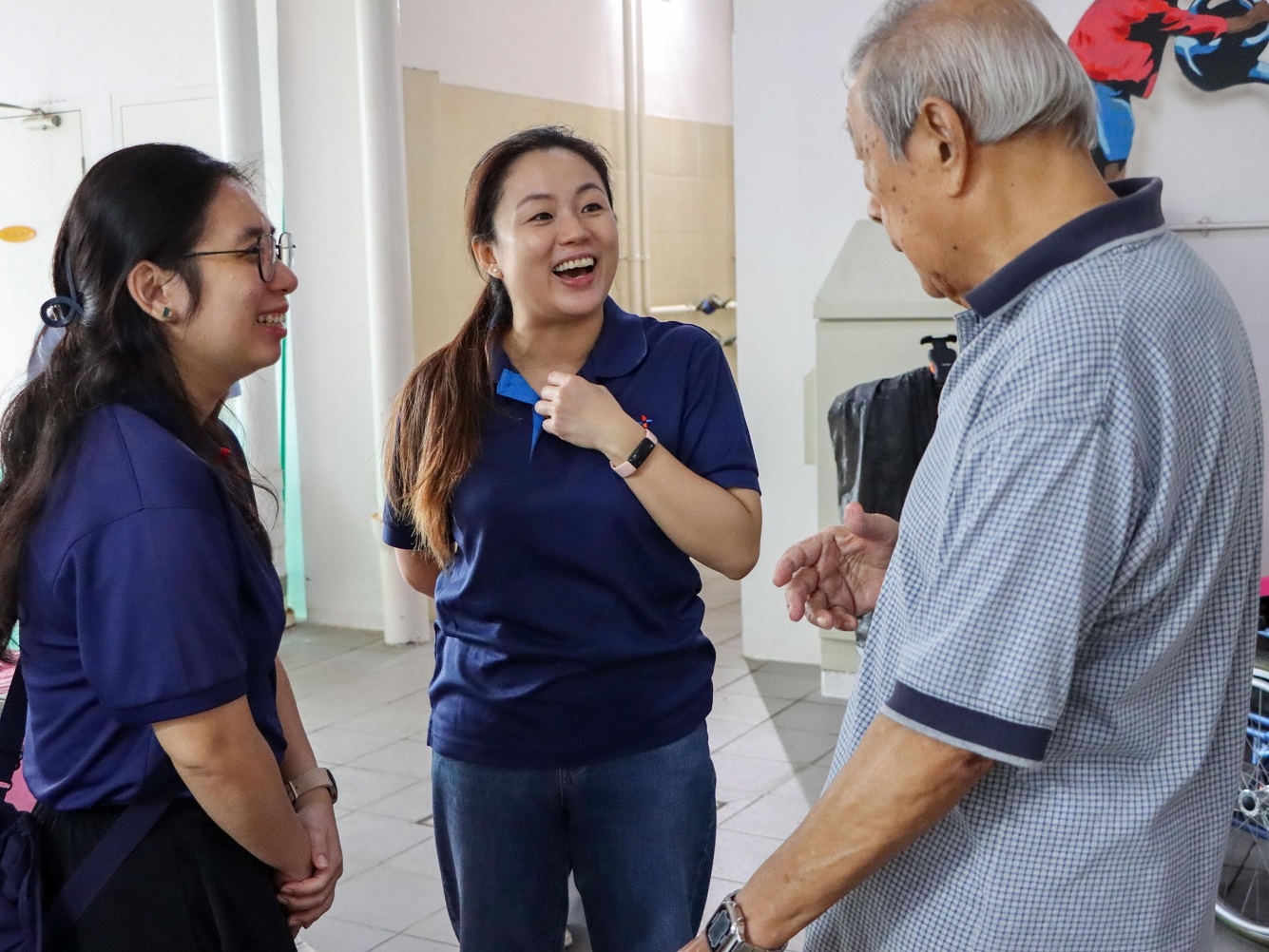
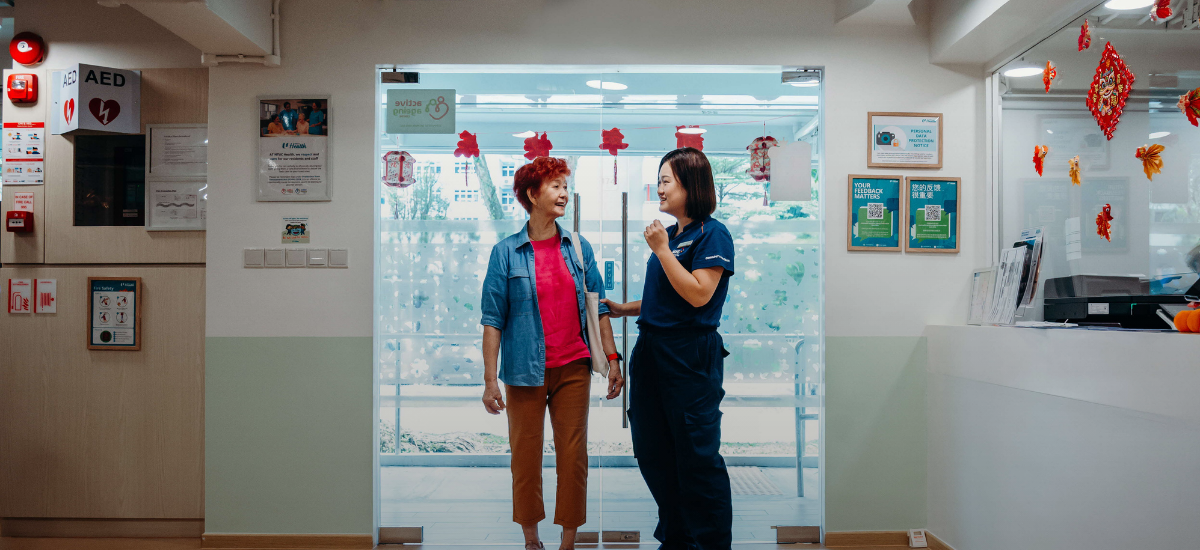
At an Active Ageing Centre in Boon Lay, a resident approaches a nurse out of curiosity. She has seen the team around, but never quite understood what they do.
That brief exchange opens the door to something more. A simple question about her health turns into a deeper conversation about her concerns, her daily habits, and how she can take better care of herself.
This is what healthcare can look like when it moves beyond hospital walls.
Across Singapore, this approach is being brought to life through the establishment of Community Health Posts in Boon Lay and West Coast, where familiar settings such as Active Ageing Centres are transformed into hubs for care, connection, and prevention.
Community Health Posts are a key touchpoint within the larger Healthy Precinct model – a neighbourhood approach designed to make healthy living part of everyday life. First piloted in Boon Lay, the approach is now being scaled to more constituencies across the west.
At the centre of this shift are National University Health System (NUHS) Community Care Teams, whose role goes beyond clinical support. They also work as trusted partners by providing chronic disease counselling, early geriatric assessments, and preventive education, supporting residents before issues escalate.
Seeing the full picture
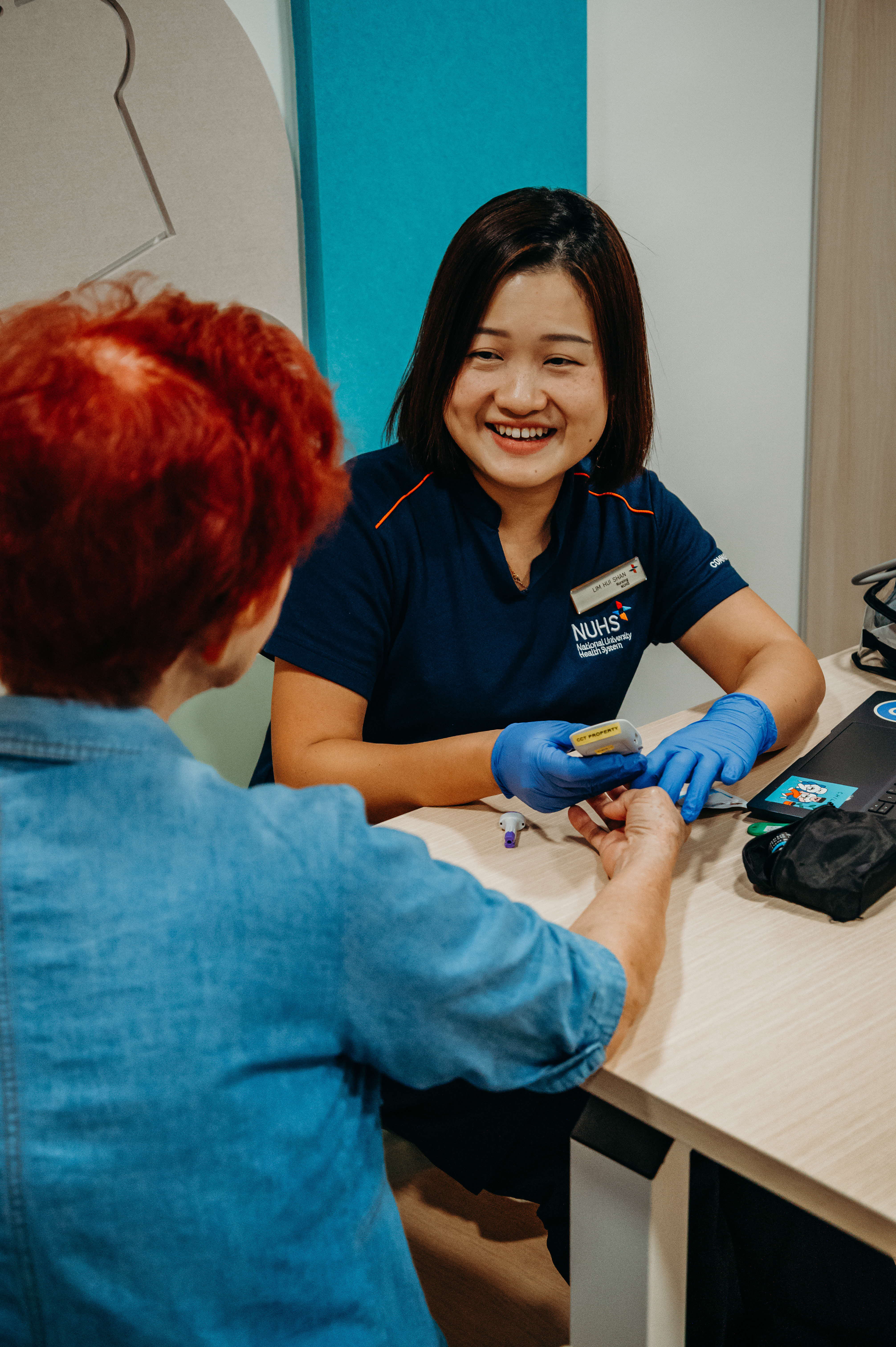
For Ms Lim Hui Shan, Nurse Clinician, NUHS Community Care, the difference is clear when care happens in the community.
“When I provide healthcare in familiar community spaces, I get to see the real struggles my patients face, not just their blood pressure readings, but underlying challenges like why they can't afford medications or struggle with adhering to appointments due to complex family and social dynamics,” she shared.
“Being in their world helps break down the professional barriers that exist in hospital settings. I'm no longer just ‘the nurse’, but someone they genuinely look forward to seeing.”
Over time, that trust makes it easier for residents to open up about the struggles they may not share in a clinical setting.
“This profound shift creates space for conversations that would never happen in clinical settings,” Ms Lim said. “Some have felt comfortable enough to share that they've been skipping meals because cooking healthily for one seems pointless, or that they have stopped taking their medication because the side effects made them feel worse than the condition itself.”
Through this, community nurses like Ms Lim are able to identify residents who may need additional support and intervene early, which helps to prevent health issues from escalating.
From treatment to partnership
In the community, care becomes a relationship rather than a one-off visit. This continuity allows support to be adjusted when required, with care stepped up or eased based on each person’s situation.
“Community nurses walk alongside our residents over time, following through on their conditions, understanding how their health changes with life circumstances, and adjusting care accordingly,” Ms Lim said.
This ongoing relationship makes residents more receptive to acting on advice and making changes. The impact of this approach is especially evident when it comes to early intervention.
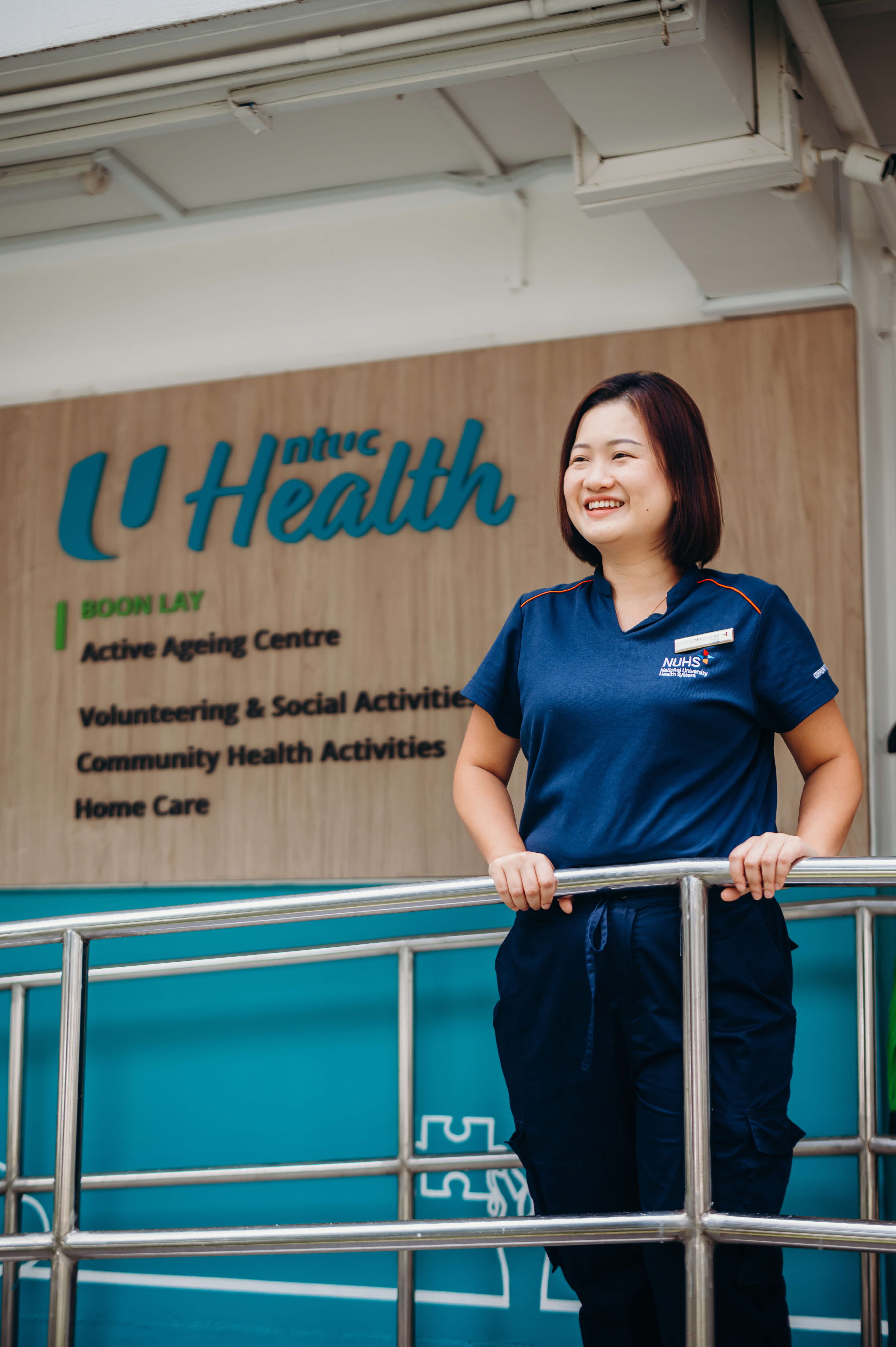
In the course of her work, Ms Lim recalled meeting another resident at a Community Health Post within an Active Ageing Centre whose diabetes was poorly controlled. He had declined insulin during a previous hospital visit because he did not fully understand his condition.
“I sat down with him to understand his perspective and listened as he shared his concerns and fears more deeply,” she said.
Without time pressure, they were able to take things slowly. Together, they reviewed his diet, daily routines, and misconceptions.
“Through this conversation, he finally grasped why insulin treatment and diet management mattered, along with the importance of exercise,” Ms Lim added.
A whole-of-community effort
Ms Lim’s work on the ground brings to life what the Healthy Precinct model represents – care that transcends hospital walls and into everyday community spaces.
With every neighbourhood shaped differently by its people, needs and social networks, the Healthy Precinct model brings together healthcare, national agencies, social services, and community partners to make healthy living more accessible.
Since its initiation in Boon Lay in March 2024, the Healthy Precinct has brought together a partnership network of 14 organisations to drive various health and social initiatives. This includes establishing three Community Health Posts, which enabled more than 500 residents to receive personalised guidance and follow-up.
This coordinated approach allows residents to be supported not just medically, but in ways that fit into their daily lives, helping them stay well and reducing the need for hospital care.
For Ms Lim, being part of this effort gives deeper meaning to her work on the ground.
“I do what I love by working closely with residents in their own communities, building trust, and accompanying them on their health journeys rather than only seeing them when they fall ill,” she said.
“Knowing that my daily work keeps residents healthier and more confident whilst helping them stay out of hospital is what motivates me to continue this work on the ground.”
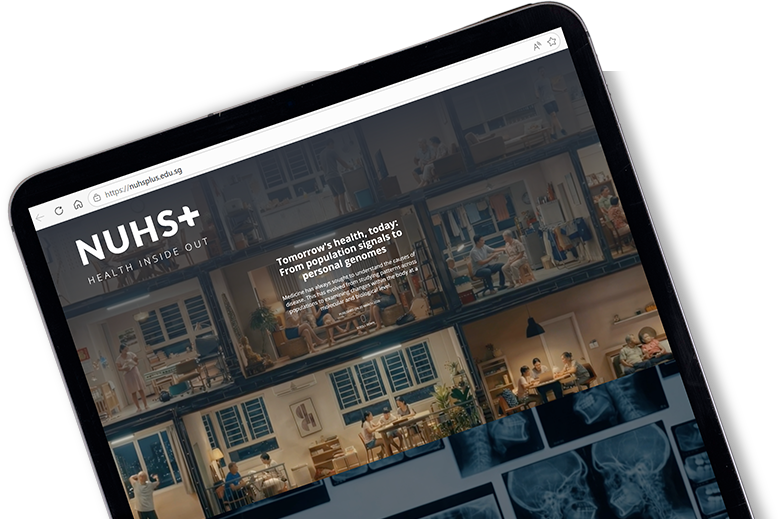
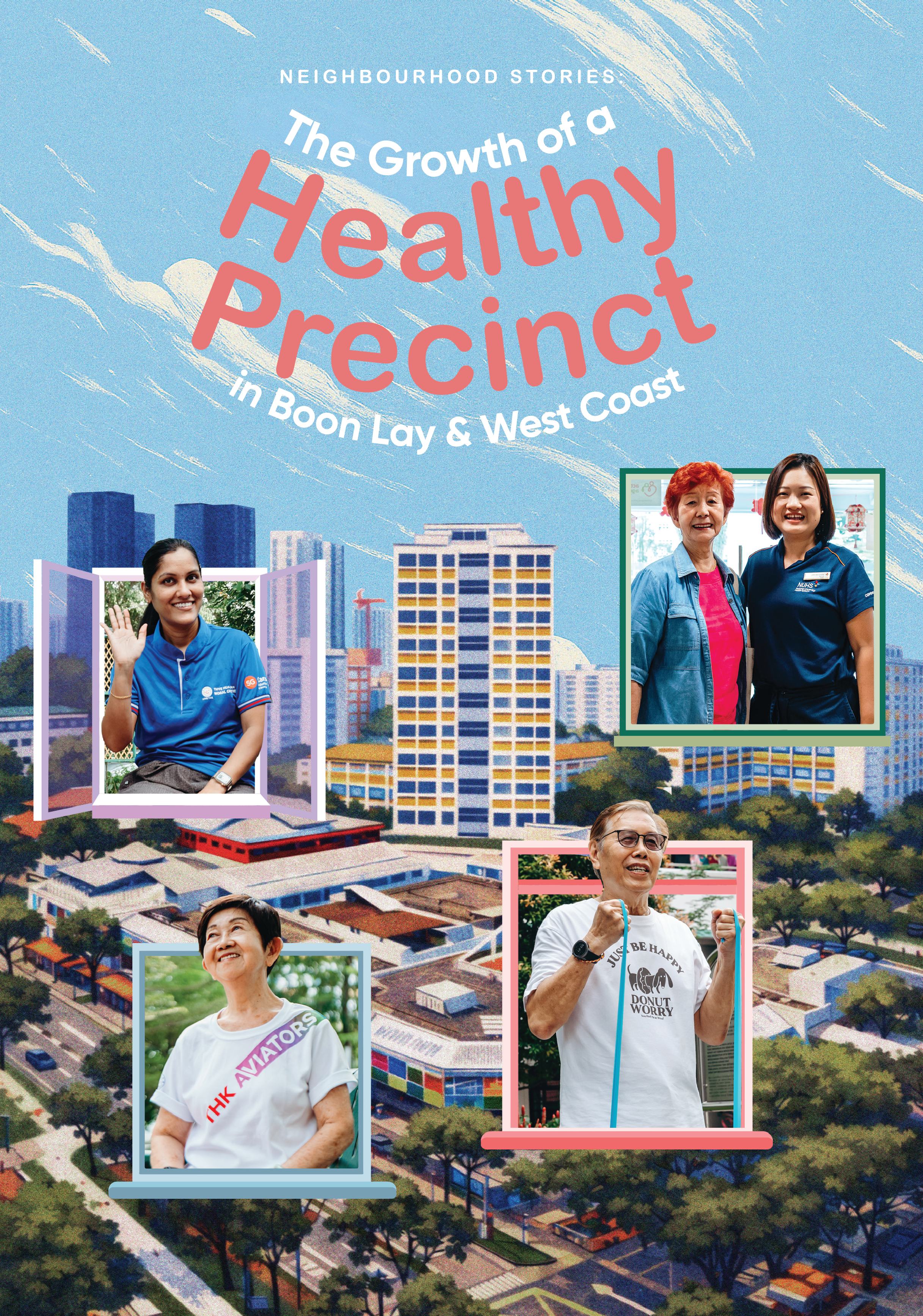
Discover how NUHS is transforming care in the community in this new e-publication, Neighbourhood Stories: The Growth of a Healthy Precinct in Boon Lay and West Coast.
In consultation with Ms Lim Hui Shan, Nurse Clinician, NUHS Community Care.
Related Articles