Beyond bedside: How nursing roles are evolving at NUHS
Published on 27 July 2026
From virtual follow-ups to home-based treatment and community care, NUHS nurses are finding new ways to support patients beyond traditional hospital settings.
Healthcare is increasingly extending beyond conventional hospital settings, with more care being delivered at home, through virtual platforms and within the community.
At the National University Health System (NUHS), nurses are helping to drive that shift. Supported by new tools, specialist training and evolving workforce models, they are taking on broader responsibilities in care coordination, clinical assessment and patient support across the care journey.
Coordinating care across the patient journey
For many patients, care does not end when they leave the hospital.
Recovery, follow-up care and ongoing support often require coordination across different providers and settings. As healthcare becomes more connected, nurses are taking on roles that extend beyond direct patient care, helping to coordinate services across multiple touchpoints and transitions.
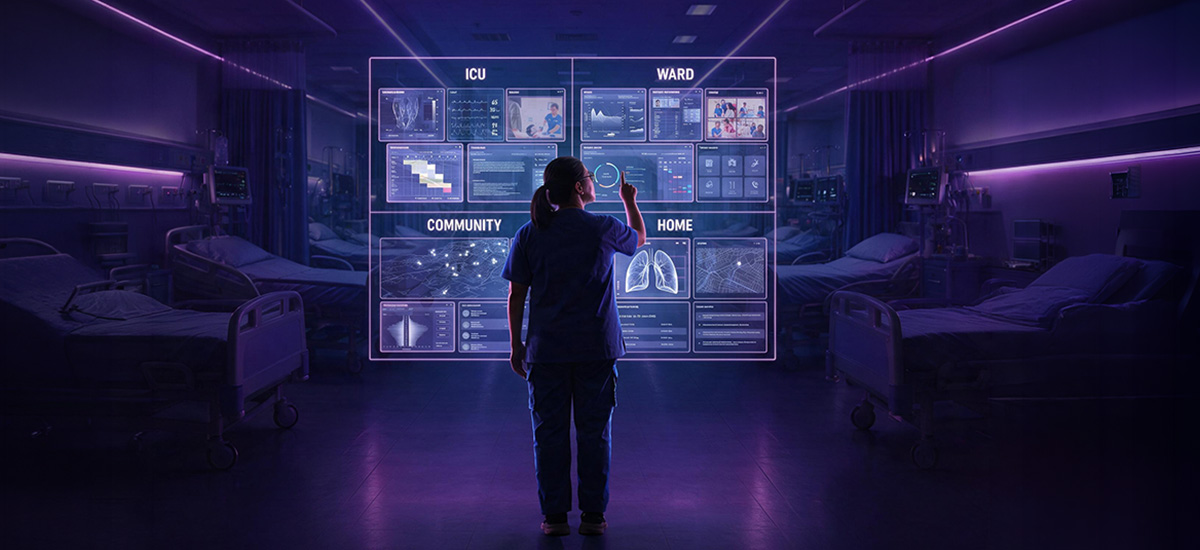
One example is the discharge process itself. At Ng Teng Fong General Hospital (NTFGH), nurses help streamline discharges through the Inpatient Virtual Operating Centre (iVOC), which centralises non-bedside discharge tasks.
Activities such as liaising with families, arranging transport, coordinating medications and activating community services are managed by a dedicated virtual command post, allowing ward nurses to focus on direct patient care. Early results from the phased rollout showed an approximate 53 per cent increase in timely patient discharges.
"We have been intentional in demonstrating that this role requires significant critical thinking and nursing competencies to coordinate care effectively," said Ms Clarice Wee, Deputy Director of Nursing, NTFGH.
For some patients, the transition home is even more significant. At the National University Hospital (NUH), specially trained nurses support patients who wish to spend their final days at home through the Harmonised Compassionate Discharge pilot. Nurses work with patients, families, hospice providers and community partners to coordinate equipment, transport, caregiver training and follow-up support.
"I felt I was that bridge to communicate the patient's wish to the family members," said Ms Junella Ang, Nurse Clinician, NUH.
"When patients are being transitioned from hospital, help is ready for them, and the support is there so the family does not feel very anxious about the whole process."
Supporting patients closer to where they live
As more care moves beyond hospitals, nurses are developing and applying specialist skills in settings closer to patients' homes. These range from specialised clinical expertise to community-based assessment and care planning.
At National University Polyclinics (NUP), nurses trained as International Board-Certified Lactation Consultants manage complex breastfeeding conditions. Introduced at Tengah Polyclinic in February 2026, the service will be expanded across all eight polyclinics by the end of the year.
"Having this lactation consultant service brings what is in the hospital to the polyclinics so that mothers can get care within the community," said Ms Nurhanesah Binte A Rahman, Assistant Nurse Clinician, NUP.
Community nurses are also playing a growing role in identifying problems early and supporting residents before their conditions worsen. Under the Step-Up/Step-Down (Shared Care) model, nurses assess residents flagged by community partners and volunteers, and develop care plans with community doctors. To date, the programme has managed more than 580 escalations, with 83 per cent resolved without requiring a visit to the emergency department.
"I hope that when people are unwell, they think about community care as a first option instead of going straight to the hospital," said Ms Yeo Ai Wah, Assistant Director of Nursing, Regional Health System Office, NUHS.
These examples show how nursing expertise increasingly extends beyond bedside care to include remote assessment, care navigation, counselling and coordination across multiple providers.
Extending care through technology
New tools are helping nurses deliver care beyond traditional healthcare settings while supporting more timely interventions.
At Alexandra Hospital (AH), nurses follow up with selected higher-risk patients after discharge from the Urgent Care Centre. During these calls, they assess recovery, reinforce care instructions and identify patients who may require further intervention.
"You need the skill to recognise when a patient may be in distress based on how they speak and what they are not telling you," said Ms Geraldine Baird, Senior Nurse Clinician, AH.
The service is part of the hospital's Virtual Care Centre, which supports care delivery through telehealth, remote patient monitoring and virtual care coordination.
Technology is also helping to bring hospital-level care into patients' homes. At NUHS@Home, nurses use a portable infusion pump to administer intravenous antibiotics to patients recovering from conditions such as cellulitis. The device delivers medication at pre-set timings, reducing the need for multiple nursing visits while allowing patients to continue their daily activities at home.
Previously, treatment for an infection such as cellulitis required three 45-minute nursing visits a day. The portable infusion pump has reduced this to a single daily visit, allowing nurses to care for more patients while enabling treatment to take place at home.
"Most patients tell us that with this pump, they are able to resume their normal routine, making them feel less like being hospitalised," said Ms Wang Yanan, Nurse Clinician, NUHS@Home.
Adapting workforce models
New ways of working are also emerging as healthcare delivery evolves and nurses practise across a wider range of settings.
NUHS has also adopted a structured approach to re-employing nurses approaching retirement. To date, 89 nurses have returned in roles ranging from direct patient care to education and mentorship, while 98 per cent of surveyed retiring nurses expressed a desire to continue working.
Ms Daw Mi Mi, Assistant Nurse Clinician, AH, returned after retirement to become a principal trainer. "I have been a renal nurse for 30 years, so I am able to share all my experience and knowledge with the younger generation," she said.
For Ms Zaiton Abu Bakar, Assistant Nurse Clinician, NUHS@Home, returning to work has meant a role quite different from her years in hospital wards. "In a home-based setting, you have to make decisions, see things for yourself, and cater to the needs of the patient, the family, and the helper," she said.
Together, these initiatives reflect how nursing practice is evolving alongside changing models of care, as nurses play a growing role in helping patients navigate care across hospitals, homes and the community.
Dr Catherine Koh, Group Chief Nurse, NUHS, said nursing practice continues to evolve alongside changing patient needs and models of care.
"Our nurses are no longer anchored to a single setting. They are orchestrating care journeys across multiple settings and touchpoints, ensuring continuity of care," she said.
As technology reduces administrative burden and simplifies workflows, nurses are increasingly able to focus on clinical decision-making, patient relationships and outcomes. At the same time, new models of care are creating opportunities for nurses to develop new skills, work across different settings and build long-term careers within the profession.
Whether supporting hospital discharges, recovering patients at home or residents in the community, the role of nursing is increasingly defined not by where care takes place, but by how it is connected.
In consultation with Dr Catherine Koh, Group Chief Nurse, NUHS; Ms Clarice Wee, Deputy Director of Nursing, NTFGH; Ms Yeo Ai Wah, Assistant Director of Nursing, Regional Health System Office, NUHS; Ms Geraldine Baird, Senior Nurse Clinician, AH; Ms Junella Ang, Nurse Clinician, NUH; Ms Wang Yanan, Nurse Clinician, NUHS@Home; Ms Daw Mi Mi, Assistant Nurse Clinician, AH; Ms Nurhanesah Binte A Rahman, Assistant Nurse Clinician, NUP; and Ms Zaiton Abu Bakar, Assistant Nurse Clinician, NUHS@Home.